Source record
"We All Die Anyway" – And Other Stupid Excuses for Neglecting Your Health
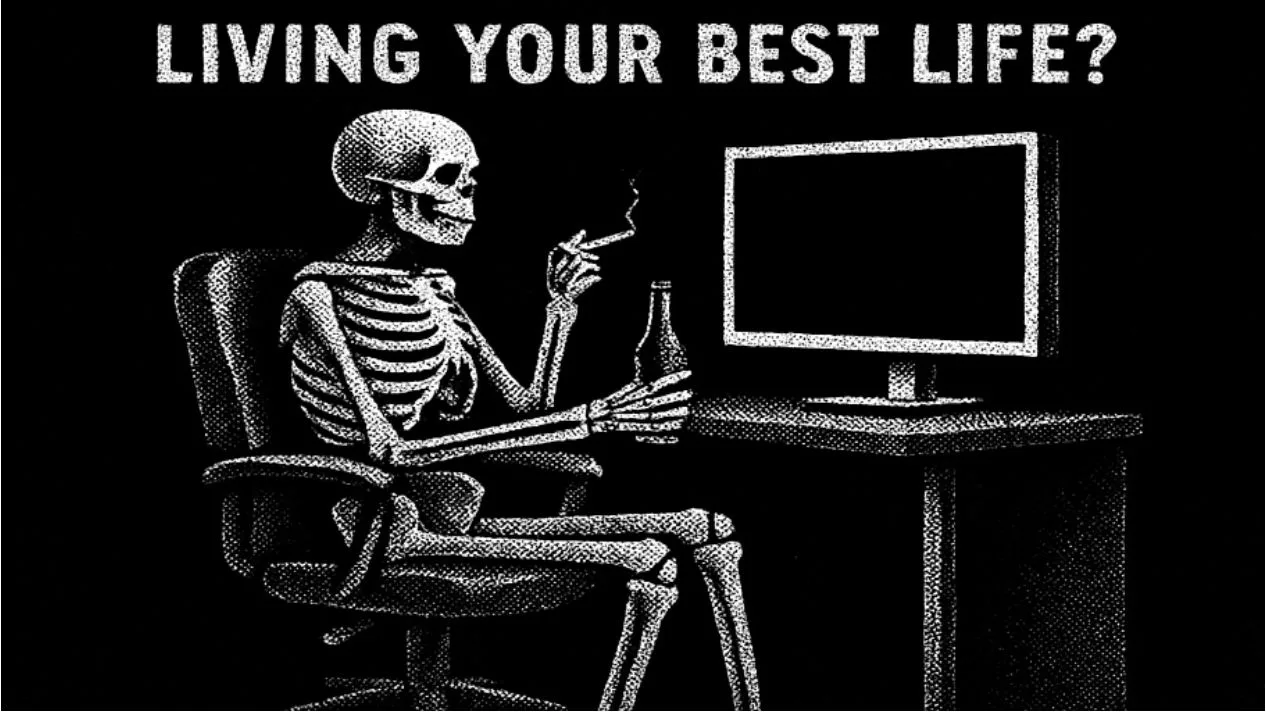
Do you think you're too busy to worry about your health? Still telling yourself you'll start eating better or exercising "next Monday"? Or maybe you just shrug and say, "We all have to die of something, so why bother now?" Sound familiar?
We humans are masters of denial when it comes to our health. We love to believe that illness and disease are things that happen to someone else, somewhere else – or at least not until we're old and gray. The truth is, your body doesn't care about your excuses. Heart disease, cancer, diabetes – they won't politely wait until you've finished that big project at work or until your kids are grown up. And they certainly don't care that you "don't like vegetables" or "only smoke when you're out with friends."
No matter if you're 18 or 80, living in New York or New Delhi, the excuses people make for neglecting their health are shockingly similar – and equally dangerous. It's time to call out these excuses for what they are: procrastinations and rationalizations that are literally a matter of life and death. In this article, we're going to shine a harsh light on the most common (and frankly, stupid) reasons people avoid taking care of themselves. We'll also look at the real consequences of those choices – backed by hard facts and statistics – and ask some uncomfortable questions along the way. If you have a habit of dodging doctors, skipping workouts, or lighting up "just one more" cigarette, consider this your wake-up call.
Why do so many of us put off healthy habits and ignore warning signs? A big part of the answer is complacency. When you're not immediately sick, it's easy to assume you're fine. Our bodies are remarkably good at coping – until suddenly they're not. Small bad choices (like nightly ice cream or daily beers) don't usually show consequences overnight. It's like a slow leak in a tire – you won't notice until you're on the highway and it blows out.
We also downplay risks with optimism bias. "That heart attack won't happen to me; it's something that happens to otherpeople." We see a 60-year-old neighbor collapse while mowing the lawn and think it's a freak event – all while ignoring that his lifestyle looks a lot like ours. This false sense of security is what keeps fast-food drive-thrus busy and gyms empty.
Another factor is priority (or lack thereof). Work, school, family, Netflix – everything else comes first, and health gets whatever scraps of time are left (if any). Modern life feels hectic, so we tell ourselves we "have no time" to exercise or cook a real meal. But somehow there's always time to scroll on the phone or watch TV. The issue isn't a shortage of time, it's how we choose to spend it.
And let's not ignore fear and denial. Going to the doctor for a check-up can be scary – what if they find something bad? It's tempting to adopt the "ignorance is bliss" approach: if you don't know about a problem, maybe it isn't there. Spoiler: it is there, and catching it early could save your life. Yet many prefer to stick their heads in the sand until a minor issue becomes a major crisis.
We take our health for granted because, in the moment, skipping the workout or eating the junk or smoking the cigarette doesn't feel like it's killing us. But as the saying goes, "a castle of health is built brick by brick" – and so is a ruin. Every unhealthy choice is a brick removed, even if the walls haven't crumbled yet. We convince ourselves everything is okay because nothing terrible has happened yet.
Think about it: you wouldn't ignore a "check engine" light in your car for years on end. So why ignore your body's warning signs (like that rising blood pressure, expanding waistline, or constant fatigue) and just hope for the best? The comfortable illusion that "I'm fine, nothing bad is happening" is exactly that – an illusion. And it sets the stage for all the excuses that come next.
Be honest: everyone has some excuse ready when it comes to avoiding healthy changes. Maybe you've used one of these classics:
"I don't have time to exercise." (Yet there's always time for social media and TV. Funny how that works.) "Healthy food is too expensive." (Have you seen the price tag on heart surgery or insulin lately?) "I'm still young – I can worry about this later." (Diseases like type 2 diabetes and high blood pressure are hitting people in their 20s and 30s now. Later might come sooner than you think.) "I'm too old to change now." (So you plan to spend whatever years you have left feeling lousy? Even in your 60s or 70s, healthier choices can improve your quality of life and add years.) "We all die anyway. You gotta enjoy life." (Enjoying life is great – but what's enjoyable about wheezing for breath or being too sick to do anything? Dying miserable and early is not much of a life strategy.) "My grandfather smoked/drank/eat bacon daily and lived to 90." (Congrats to Gramps, but he's the exception, not the rule. For every person like him, there are thousands who die decades earlier from the same habit. Playing Russian roulette because someone else got a lucky chamber is a dumb plan.) "I feel fine, so I must be healthy." (Lots of serious conditions – high cholesterol, hypertension, even early cancer – don't make you feel sick until significant damage is done. By the time you don't feel fine, it's often too late.) "I need my [cigarettes/drinks/junk food] to cope with stress." (Stress is real, but self-destruction is a lousy coping mechanism. There are healthier ways to unwind that won't kill you slowly.) "I'll quit... eventually." (Someday, one day, just not today. This is the eternal mantra of the procrastinator. The problem is, "later" has a nasty habit of turning into "never" – or into "now it's too late.")
Sound familiar? These excuses are so common that they're almost clichés. We use them to shield ourselves from guilt and justify doing what’s easy over what’s right. But while you're busy coming up with reasons not to take care of yourself, your body is busy accumulating the consequences.
Alright, enough about the why – let's talk about the result. What price do those convenient excuses actually exact? In plain terms: they cost years of your life. We live in an age where non-communicable diseases (the ones largely driven by lifestyle choices) have become a global epidemic. In the last 10–15 years, the toll of these diseases has been staggering. According to the World Health Organization and other major global studies, here are the annual body counts from some key unhealthy habits:
8 million – that's roughly how many people worldwide are killed each year by tobacco use (mostly smoking).
3 million – number of deaths per year caused by harmful use of alcohol (yes, that "relaxing" drink can be a killer).
11 million – deaths a year linked to poor diets and obesity (junk food is literally destroying bodies globally).
3.2 million – deaths annually due to lack of physical activity (couch potatoes, this one's on you).
Those are not typos or extra zeros. We're talking millions of real people – fathers, mothers, friends, children – dying because of habits that are preventable. By the way, these figures aren't from the 1800s or some plague outbreak; this is now, in our modern world of supposed medical "miracles".
The leading causes of death today are not mysterious new viruses or exotic diseases. They're the same old culprits: heart disease (around 18–19 million deaths a year globally as of 2021), stroke, cancer (~9–10 million), chronic lung diseases (~4 million), and diabetes (over 1.5 million). What do most of these have in common? They are heavily fueled by the very habits we're making excuses for. You smoke a pack a day – you dramatically raise your risk of lung cancer, heart attack, stroke. You live on burgers and spend your evenings glued to a screen – don't be surprised when obesity and diabetes come knocking, and with them, a higher risk of everything from kidney failure to amputations to, yes, heart attacks.
Still think you're bulletproof? Consider this: each of those numbers above isn't just a statistic; it's a warning sign. It's your future, if you stay on the same path as the people who make up those statistics. Every one of those millions who died thought, "It won't happen to me" – until it did.
And it's not only about death. For every person who dies, there are many more living with chronic illnesses that sap their strength and happiness. Ever seen someone carry an oxygen tank because their lungs are shot from smoking? Or a diabetic who lost a foot? Or a middle-aged person who needs daily pills just to keep their blood pressure in check? These are the real-life consequences of the "good times" you think you're having now by ignoring your health. It's a pretty brutal trade-off: a few years of indulging vs. potentially decades of suffering.
Remember the COVID-19 pandemic? We learned a harsh lesson: people with underlying health issues (obesity, diabetes, lung damage from smoking) were far more likely to get seriously ill or die from the virus. In other words, neglecting your health can come back to haunt you even in ways you didn't expect. When crisis strikes – whether it's a virus, an accident, or just Father Time catching up – your excuses won't save you. Only your actions (or lack thereof) will matter.
Let's address another myth: that there's some "safe age" group who can ignore their health. If you're thinking, "I'm too young to worry" or "I'm too old to bother now," you're dead wrong (possibly literally).
Young people (teens & 20s): You might feel invincible now. Your energy is high, bounceback is quick, and serious illness seems a lifetime away. But guess what – bad habits start killing you early, they just do it quietly. Arteries can start accumulating plaque in your teens if your diet is garbage. By your 20s, you could already have the beginnings of liver damage if you're a heavy drinker or early signs of lung damage if you started smoking young. Doctors today are diagnosing type 2 diabetes in teenagers – something that used to be unheard of. Young athletes in their 20s have dropped dead of undiagnosed heart conditions exacerbated by energy drinks or steroids. And beyond chronic illness, think about accidents: how many young people end up dead or disabled each year from drunk driving, overdoses, or other risky behaviors? You are not invincible. Life can hit you hard at any age. Why wait for a near-miss or a hospital scare to start caring about your health?
Busy adults (30s & 40s): This is prime time for the "I'm too busy" excuse. Career, kids, responsibilities – I get it, you're stretched thin. Ironically, these are also the years when neglect catches up: high stress and no self-care is a recipe for hypertension, burnout, and worse. It's not a coincidence that people in their 40s start to get diagnosed with the very conditions we associate with "middle age" – high blood pressure, elevated cholesterol, pre-diabetic blood sugar levels – all that fun stuff. How many folks in their 30s say "I'll get in shape next year," and before they know it, they're 45 with a gut, on two meds, and can't walk up a flight of stairs without panting? The crazy part is, these are often the people juggling family and work – the very people whose loved ones depend on them being healthy. If you're a parent or a partner, ask yourself: what happens to your family if you suddenly collapse? Who are you "doing it all" for if you won't be around to enjoy it? At this stage of life, you have a choice: prioritize your health as non-negotiable or risk losing it right when you've got the most to lose. Saying you can't squeeze in 30 minutes to exercise is a hollow excuse when the other option might be being forced to take 30 days off recovering from a bypass surgery or stroke. Choose wisely.
Older adults (50s and beyond): Some people think once they've hit a certain age, there's no point in changing – the damage is already done. "Why quit smoking now? The harm's done." "Why start eating salad at 65? Might as well enjoy my time." Here's the truth: it's never too late to benefit from healthier habits. Studies have shown that even people in their 60s or 70s who improve their diet, get more active, or quit smoking see improvements. Quit smoking in your 60s, and within a year your stroke risk drops significantly; within a few years, your body begins to heal in remarkable ways. Start walking daily at 70, and you'll be more mobile and independent at 80. I've seen 80-year-olds run marathons and 90-year-olds doing yoga. Sure, you might not become Arnold Schwarzenegger or reverse all damage, but you absolutely can improve how you feel and perhaps extend your life. Besides, if you've made it this far, don't you want to stick around a little longer – and not just alive, but well? Every extra year you gain through healthy changes is a year you can spend with grandkids, travel, or just enjoy not being in constant pain. And if nothing else, think of it as atonement: giving your body some belated respect. It's never too late to care, unless you're literally on your deathbed – and if you're reading this, you're not.
The bottom line: nobody gets a free pass. All ages, all walks of life, every country – the grim reaper does not discriminate, and neither do lifestyle diseases. The earlier you start healthy habits, the better. But even if you start late, it's better than never. And if you choose never... well, the outcome of that choice is pretty predictable.
You might also think, "Well, everyone around me lives like this, so it must be okay." Just because an unhealthy lifestyle is common in your community or country doesn't make it any less deadly. In fact, it's driving health crises worldwide. Bad habits know no borders.
Take a look around the globe: In the United States and Mexico, record levels of obesity and sugar consumption have led to skyrocketing rates of diabetes and heart disease. In Eastern Europe and Russia, decades of heavy drinking and smoking have contributed to men living significantly shorter lives on average (many not even reaching retirement age). In parts of Asia, countries like China and Indonesia have huge numbers of smokers – and consequently, rising rates of lung cancer and stroke. The wealthy Gulf countries with sedentary lifestyles and rich diets have some of the highest diabetes rates in the world. Even in Japan and Mediterranean countries (often praised for healthy traditional diets and longevity), Western fast-food and smoking have made inroads, leading to increases in obesity and related problems among younger generations.
The point is, no country has a monopoly on unhealthy living – it's a universal problem. Globalization has made sure that burgers, pizzas, sugary drinks, and cigarettes are available pretty much everywhere, and local unhealthy traditions (like super-salty processed foods or cultural binge-drinking) add fuel to the fire. Everywhere you go, you'll hear the same excuses we listed earlier, just in different languages. And everywhere, the results are the same: people dying needlessly from preventable causes.
Sure, some countries are fighting back with public health measures – higher taxes on tobacco and alcohol, campaigns to promote exercise, better food labeling, etc. And these can help a lot. Smoking rates in places like the US and UK have dropped over the last 20 years thanks to aggressive anti-tobacco policies, and life expectancies have improved as a result. But even in those countries, obesity has surged, partially offsetting the gains. And in the end, no government can force a donut out of your hand or drag you out of bed for a jog. Culture and environment influence you, but ultimately, it's on you as an individual to break out of unhealthy patterns.
So don't kid yourself that "it's just how things are where I live." If how things are is making people sick, dare to be different. Maybe you'll inspire others around you to do the same – healthy habits can be contagious too. Remember, your body doesn't care what passport you carry; it responds to how you treat it.
We've covered a lot, and by now one thing should be blindingly clear: every excuse in the book is just that – an excuse. The diseases, the risk factors, the painful outcomes, they don't care about your reasons. They only care about what you actually do.
This isn't about shaming anyone, it's about empowerment through brutal honesty. Yes, the truth is uncomfortable: much of our suffering from chronic disease is self-inflicted. The flip side of that coin is hopeful – if our choices got us into this mess, different choices can get us out. You have far more power over your future health than any doctor, pill, or miracle cure ever will.
So, will you keep telling yourself sweet little lies while inching closer to an avoidable tragedy? Or will you finally take ownership of your well-being? The next time you catch yourself making an excuse to skip exercise or eat that third donut or cancel that doctor's appointment, pause and remember what’s at stake. Your life. Your future. The people who care about you and want you around.
You can start small. Take a brisk walk instead of binge-watching another show. Swap fries for a salad once in a while. Schedule that medical check-up you've been avoiding. None of these are as hard as dealing with a chronic disease later. Every positive step is an investment in not feeling like garbage as you get older – in actually having a future to look forward to.
Enough with the excuses. Everyone wants to go to heaven, as the saying goes, but no one wants to die. Well, likewise, everyone wants to be healthy, but no one wants to do the work. It's time to do the work.
The choice is yours: continue on the path of least resistance and hope you beat the odds, or step up and stack the odds in your favor. Deep down, you already know what the right choice is – it's the one you've been putting off. No more "tomorrow." Your body is calling you out today.
If you think wellness is expensive, try illness.