Source record
From TikTok to Reels: The 8-Second Attention Span Crisis
A familiar sight: people everywhere glued to short videos on their phones. These 15–60 second clips have seized our attention – but what are they doing to our ability to focus?
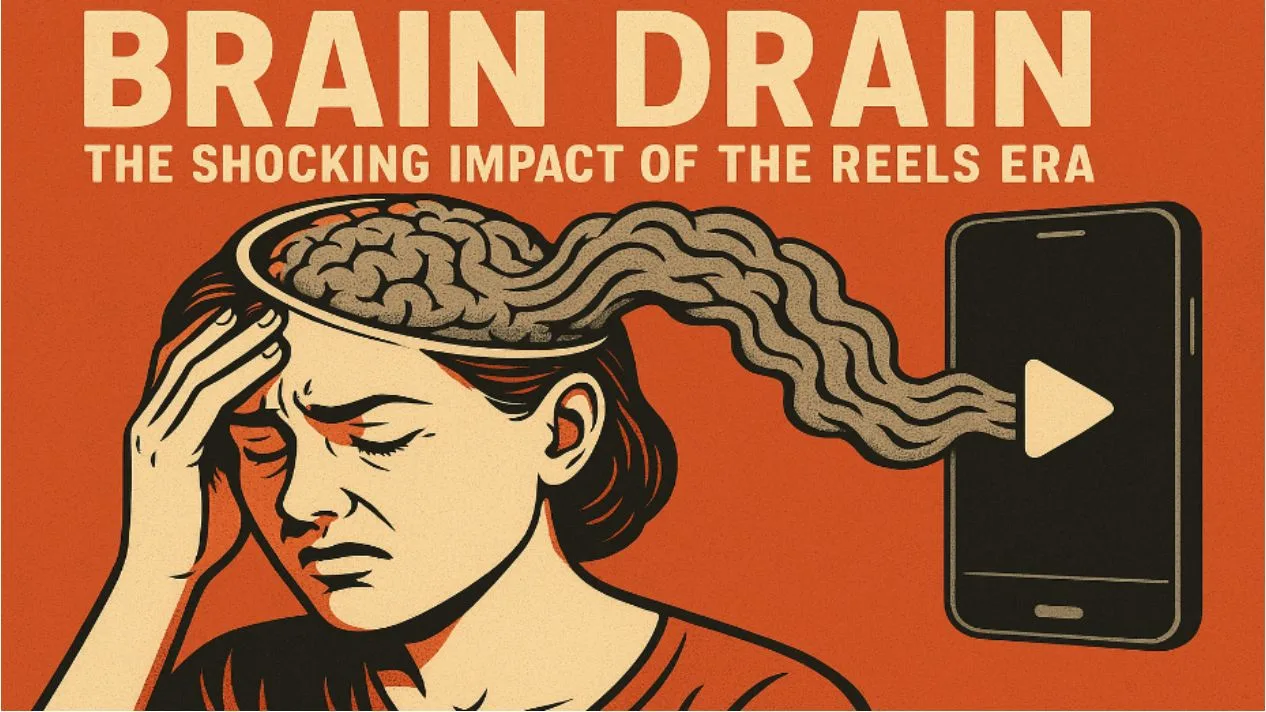
Have you caught yourself scrolling TikTok or Instagram Reels, only to realize an hour has vanished in a blur of 15-second videos? Do you struggle to read a full page of a book without itching to check your phone? If so, you’re not alone – and it’s not just in your head. Our collective attention span is shrinking, and many experts point to the explosion of ultra-short videos on platforms like TikTok, YouTube Shorts, and Instagram Reels as a key culprit. In fact, a Microsoft study found that the average human attention span has dropped to only about eight seconds – shorter than a goldfish’s. This alarming decline in focus has been nicknamed “TikTok brain”, a term for the modern twitchy, short-attention mindset fueled by endless quick-hit online content. How did we get here, and what does it mean for learning, memory, and our brains? Let’s scroll through the story.
It’s easy to see why these bite-sized videos are so irresistible. TikTok, the platform that kicked off the short-video craze, has over 1.5 billion users and racks up more watch time per user than any other social app. The average TikTok user spends a staggering 95 minutes per day glued to the app – often in marathon swiping sessions that blur one clip into the next. At roughly 15–30 seconds a video, that could mean viewing 200+ videos in a single day. And it’s not just TikTok: YouTube’s competing Shorts feature now generates 70+ billion views every day, and Instagram Reels engage over 2 billion users monthly, with 200 billion plays daily across Instagram and Facebook. In other words, a huge chunk of humanity is now hooked on an endless feed of micro-videos.
What makes these super-short clips so compelling – sometimes more so than longer content or real life? Psychologists say the secret lies in the brain’s reward system. TikTok and its copycats are engineered like a slot machine for your mind. Each video is a quick, self-contained burst of entertainment; with a flick of your finger, a new surprise appears. Sometimes it’s a hilarious skit or a satisfying life hack, other times a dud – and that unpredictability is exactly what gets us hooked. This phenomenon is known as “random reinforcement”. Much like pulling the lever on a casino slot machine, you never know when the next video will deliver a dopamine-releasing “jackpot” of enjoyment. Swipe… funny cat video! Swipe… boring clip. Swipe… wow, amazing trick! The brain’s reward centers light up at those unexpected rewards, training us to keep swiping in search of the next hit. As Dr. Julie Albright of USC notes, the rapid-fire scrolling and variable rewards make these apps addictive by design. It’s digital candy for the brain – and we’ve been binging on it.
Neuroscience is now confirming that our brains respond powerfully to this short-form video binge. In one study, researchers scanned the brains of college students while they used a TikTok-like app. The result? The brains of those most “addicted” to short videos showed heightened activity in areas involved in addiction and reward, and some participants literally had trouble stopping themselves from scrolling. In plain terms, TikTok tricks your brain into craving just one more video… again and again. Little wonder pediatricians have dubbed TikTok a “dopamine machine” for its ability to provide constant instant gratification hits.
All that swiping and instant stimulation might feel entertaining, but over time it’s like a high-speed treadmill for your attention span – and many fear we’re training our brains to need constant kicks. “Many experts believe TikTok and platforms like it are killing children’s attention spans”, reported one law & technology journal. In other words, the more we get used to information arriving in millisecond bursts, the harder it becomes to engage with anything that isn’t as immediately exciting. Emerging research suggests that bingeing on short-form videos makes it difficult for young people to partake in activities that don’t offer instant and constant rewards. Tasks like reading a textbook, listening in class, or doing a hobby that requires patience can feel impossible without that quick dopamine fix. If you’ve ever felt restless or bored during a slow moment – reaching for your phone for a quick dopamine boost – that’s the effect in action.
Alarmingly, our baseline ability to pay attention is indeed measurably dropping. Over the last 15 years (a period that coincides with the rise of smartphones and social media), the average human attention span has plummeted by about 30% – from roughly 12 seconds to only 8.25 seconds today. And the youngest generation may be the most impacted. Gen Z (who grew up on Snapchat, TikTok and YouTube) now has the shortest active attention span of any age group – a blink-and-you’ll-miss-it 1.3 seconds on average. Yes, you read that right: 1.3 seconds. That number comes from marketing research, but it underscores a real point – capturing young people’s focus is harder than ever. As one viral survey by TikTok itself found, over half of users said videos longer than one minute were “stressful” – they’ve been conditioned to prefer content that delivers the goods in seconds.
Our brains are even physically adapting to this new hyper-stimulating environment. Paradoxically, a 2025 neuroscience study revealed that heavy short-video users had noticeable differences in brain structure. MRI scans of 100+ undergrads showed that those who felt most “attached” to short videos actually had more grey matter in the orbitofrontal cortex (decision-making and emotion) and in the cerebellum (movement and emotional processing) than their peers. In essence, the TikTok addicts’ brains looked different. Scientists are still debating what more grey matter means in this context – it could be an adaptive response, or a sign those brain regions are working overtime. But it’s clear that spending hours swiping tiny videos is literally rewiring parts of our brain. Some have playfully called this supposed damage “TikTok brain rot,” implying our brains are melting from overuse. The reality might be more complex than “rotting,” but one thing is certain: our brains on TikTok are not the same as before.
Craving constant stimulation doesn’t just affect how we watch videos – it spills over into all aspects of life. Psychologists note that compared to a few decades ago, today’s youth are bombarded with far more stimuli. “When I grew up, you had three TV channels… This generation is getting bombarded with images,” observes Dr. Mary Ann Covey, an adolescent psychologist. That overload, she says, is contributing to higher levels of stress and anxiety among young people. Essentially, our brains are always on, hopping from one quick snippet to the next, never slowing down to decompress. It’s no wonder that mental health issues like anxiety, depression, and digital addiction have risen in tandem with screen time. The constant stream of flashy content can overstimulate and exhaust the mind.
The effects of this attention erosion are showing up starkly in classrooms and homes around the world. As students returned to in-person school after the pandemic, teachers noticed something was off. “A lot of students will blank out after a few seconds… they get bored,” reported one high school teacher, comparing post-TikTok students to those before. Educators everywhere are observing that kids and teens can’t concentrate as long as they used to. Lessons that held children’s focus a decade ago now struggle to compete with the instant gratification of a phone in their pocket. Many students literally cannot sit through a 40-minute lesson without sneaking a peek at TikTok or feeling the itch of restlessness. Attention spans have become so fragile that teachers are adapting how they teach – incorporating short video clips, movement breaks (“brain breaks”), and interactive segments to re-engage students whose minds wander after just a few minutes.
The statistics paint a sobering picture. One analysis found that about 67% of teens use TikTok, and many got addicted to endless scrolling during COVID lockdowns. Now those same teens are back in school, expected to focus on math or literature – and they’re struggling. Research from Denmark even suggests that public interest in topics now rises and falls more rapidly than before, as our collective attention flits from one trending topic to the next in record time. In other words, not only are we individually distracted, but society as a whole jumps from fad to fad faster, with less sustained focus on any one issue.
Losing the ability to concentrate isn’t just an academic problem – it can ripple through every facet of life. With diminished attention spans, achieving long-term goals becomes more difficult. Imagine trying to learn a musical instrument, master a sport, or excel in a career when your brain craves a distraction every 30 seconds. Many young people report feeling restless or “bored” unless they’re scrolling or multitasking, which makes it hard to engage in deeper, more rewarding activities that require patience. There’s also a cost to memory and deep learning – information encountered in a frenzied swipe session doesn’t stick the way slower, focused reading or listening does. Over time, constantly living in the fast-scrolling world could erode critical thinking and creativity, skills which often emerge from boredom or extended focus. And as mentioned, mental well-being is at stake too: spending 3+ hours per day online (very common among short-video fans) is linked to higher risks of mental health issues like depression and anxiety. It’s a cruel irony that the platforms we turn to for quick laughs and stress relief may be adding to our stress in the long run.
The situation might sound dire – and the “TikTok-ification” of everything from entertainment to education is certainly a real challenge. But awareness is the first step to fighting back. Even as we enjoy our bite-sized videos (and let’s face it, there’s plenty of fun and even educational content out there), we can also take steps to restore our attention span. Some teachers, for instance, are now deliberately scheduling short “digital detox” periods or mindfulness exercises to train students’ focus muscles, treating attention like the gym for your brain. Experts recommend taking regular breaks from frenetic scrolling and practicing doing one thing at a time – whether it’s reading a longer article, enjoying a hobby without the phone nearby, or simply sitting with boredom (remember boredom? It’s where imagination often thrives).
Social media platforms themselves are noticing the concerns. There are calls for features that encourage healthier usage – for example, screen time reminders or even short-form content that pauses to prompt reflection (imagine a TikTok for math or for meditation, as one teacher wistfully imagined). Ultimately, it comes down to each of us to set some boundaries in this attention marketplace. Our brains are plastic – they can be retrained. Just as they adapted to craving constant stimulation, they can adapt back to savoring deeper focus.
In the end, short videos aren’t going away – they’re a new staple of modern culture with even some benefits (quick learning, creative expression, global connection). But we as a society are now reckoning with the trade-off: What do we lose when we gain endless easy entertainment? The next time you find yourself reflexively reaching for that dopamine hit of a quick video, pause for a moment. Eight seconds may be the average attention span today, but we don’t have to accept that fate passively. By understanding the tricks these platforms play on our brains and by mindfully choosing when to indulge, we can enjoy the best of the digital world without completely losing our ability to focus. Our attention is a precious resource – perhaps the most valuable thing we have – and it’s time to reclaim it, one focused minute at a time.
Attention is the new oil. Every second you spend in the infinite scroll is a barrel you hand over—free of charge—to algorithms that don’t care about you.
Eight-second focus ≠ eight-hour success. The future belongs to those who can dive deep while everyone else skims. Depth is now a competitive advantage.
Dopamine isn’t destiny. Your brain is plastic. Train it. Starve the reflex, feed the resolve. Read one long article a day. Sit with boredom until creativity kicks in.
Swipe responsibly. Short-form video can inspire, educate, entertain. Use it—don’t let it use you. Set timers, unfollow noise, curate signal.
Build a fortress of focus.
Long-form reading workouts Mindfulness reps Deep-work sprints
That’s your neural gym. No membership fee, just intention.
Choose now. Every swipe is a vote for the mind you’ll inhabit tomorrow.