Source record
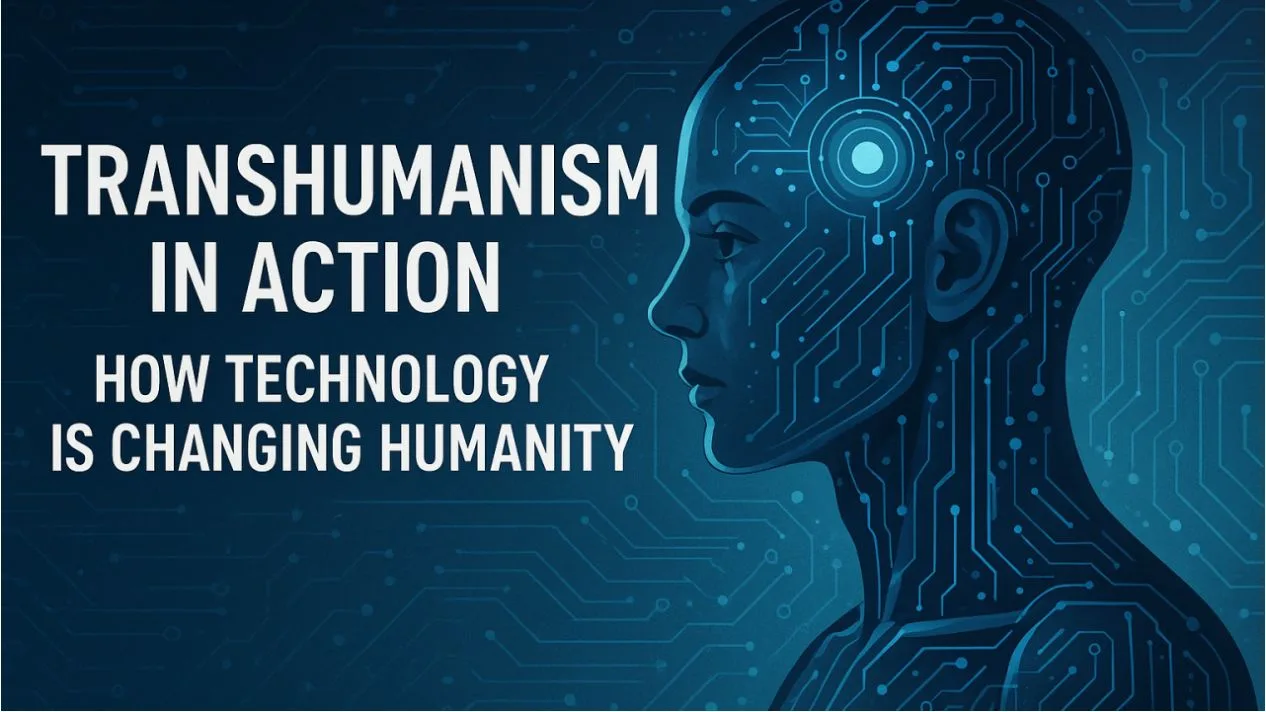
TRANSHUMANISM IN ACTION: HOW TECHNOLOGY IS CHANGING HUMANITY
Transhumanism often evokes images of science fiction – cyborgs, immortality, and superhuman abilities. But in 2025, transhumanism is not science fiction; it’s part of our modern reality. Every day, millions of people live with technological and biomedical enhancements that would have seemed fantastical just a few decades ago. From life-saving implants to gene editing therapies and AI doctors, human enhancement has arrived. This article explores the present-day landscape of transhumanism, highlighting real examples already improving lives and raising profound questions about the future of humanity. (Would you consider upgrading your body or health with technology if you could?)
One of the most concrete examples of transhumanism today is the medical implant. Consider the cardiac pacemaker – a small electronic device that regulates heartbeats. First implanted in humans in the 1950s, pacemakers have evolved into high-tech marvels. In 2023 alone, an estimated 1.43 million pacemakers were implanted. In the United States, about 3 million people live with pacemakers keeping their hearts in rhythm, and around 200,000 new devices are implanted each year for patients with. These are literal cyborg implants – a fusion of human tissue and machine – that have become routine. Few would label a pacemaker patient a “transhuman,” yet they embody human-tech integration, often forgetting the tiny computer ticking inside them.
Another everyday cyborg technology is the cochlear implant, which restores hearing to those with profound deafness. This electronic device, surgically embedded in the inner ear, directly stimulates the auditory nerve with signals from an external microphone and sound. As of 2019, roughly 736,900 people worldwide had cochlear, and the number has been climbing steadily. By the mid-2020s, over 1 million individuals have received cochlear implants to regain a sense of sound – making cochlear implants arguably the most successful neural prosthesis to date. These implants don’t perfectly replicate natural hearing, but they enable children born deaf to learn spoken language and allow adults to reconnect with the auditory world.
Would you implant a device to restore or enhance one of your senses if you lost it?
Pacemakers and cochlear implants show that transhumanism is already mainstream in medicine. We have normalized implantable tech that keeps people alive and augments sensory abilities. These devices are approved by regulators like the FDA and supported by medical institutions worldwide. They raise few eyebrows now, yet they blur the line between human and machine in a very real sense.
If implantable devices merge man and machine, gene editing changes us from the inside out. The field of genomic medicine has advanced rapidly, and the once-hypothetical idea of rewriting human DNA is now in clinical reality. CRISPR – the gene editing tool likened to molecular “scissors” – has moved from labs to hospitals. In December 2023, the FDA approved the world’s first CRISPR-based gene therapy for patients with sickle cell disease. The treatment, called exa-cel (exagamglogene autotemcel), was co-developed by Vertex Pharmaceuticals and CRISPR Therapeutics, and it uses CRISPR-Cas9 to edit bone marrow cells, functionally curing a once-incurable genetic illness. The United Kingdom’s regulatory agency had approved the same therapy a month earlier, making these the first countries to green-light a therapy that directly edits human genes.
Beyond this landmark, there is an explosion of gene therapy trials in progress. As of early 2024, researchers had registered over 100 clinical studies involving CRISPR gene editing, with at least 84 active trials underway around the world. These trials target diseases from blood disorders and cancer to hereditary blindness and HIV. Companies like CRISPR Therapeutics, Editas Medicine , and Intellia Therapeutics, Inc. (often in partnership with bigger pharmaceutical firms) are testing if editing genes can treat or cure conditions that were previously lifelong burdens. In one high-profile trial, CRISPR Therapeutics was used to edit immune cells to fight leukemia; in another, it’s being used in vivo to fix a gene in the liver that causes a deadly cholesterol disorder.
Crucially, this is happening now, not in some far-off future. The first gene-edited patients (outside of a controversial 2018 case in China) enrolled in trials around 2019. By 2023, dozens of people have had their cells edited by CRISPR and reintroduced into their bodies with promising outcomes. The FDA and other regulators are actively reviewing data from these trials. What once sounded like science fiction – editing DNA to cure disease – is becoming a clinical service.
But as we gain the power to rewrite our genetic code, we face profound questions: Who decides what traits or diseases to edit? Could “gene therapy” one day be used for enhancement rather than cure? Would you edit your or your child’s genes to be disease-free?
Perhaps the most futuristic-sounding enhancements are brain-computer interfaces (BCIs) – devices that connect the human brain to external computers or prosthetics. Yet here too, reality is catching up quickly. In May 2023, Elon Musk’s company Neuralink In May 2023, Elon Musk’s company Neuralink received FDA approval to launch its first-in-human clinical trial of a fully implantable BCI device. Neuralink’s implant – a small chip embedded in the skull with ultra-thin electrode “threads” penetrating the brain’s motor cortex – is designed to let paralyzed patients control a computer cursor or prosthetic just by thinking. By early 2024, Neuralink announced it had implanted its brain chip in the first human patient as part of this trial, marking a significant milestone for the field.
Neuralink is not alone. In July 2022, a company called Synchron beat Neuralink to the punch by implanting a BCI in a U.S. patient in a FDA-approved trial. Synchron’s approach is especially novel – they deploy an electrode array via the bloodstream (like a stent) to avoid invasive brain surgery. This Stentrode BCI allowed a patient with paralysis to control digital devices hands-free by translating their neural signals into computer commands. Meanwhile, academic research consortia (such as the BrainGate team) have been implanting electrode grids in volunteers for years, enabling feats like a quadriplegic man moving a robotic arm with his thoughts or a “locked-in” patient typing out messages via direct brain control.
These advances herald a new era of neural augmentation. The current BCIs in trials are primarily aimed at medical needs – restoring communication, movement or sensation to those who have lost them. Yet the pace of progress suggests broader uses are on the horizon. Entrepreneurs speak of eventually giving healthy people cognitive or sensory enhancements via BCIs (for instance, memory support or even telepathic communication). For now, the reality is that dozens of people around the world are living with experimental brain implants that effectively make them part human, part machine in function. They are the pioneers of a transhuman future where the line between mind and computer blurs.
If a safe brain implant could enhance your memory or intelligence, would you consider it? Where should we draw the line between therapy and enhancement?
Another facet of transhumanism in everyday life is the rise of wearable robotics like exoskeleton suits. These are external frameworks powered by motors or springs that augment a person’s strength, endurance, or mobility. Once the stuff of comic books (think Iron Man’s suit), exoskeletons are now used in rehabilitation hospitals and even workplaces. In fact, over a dozen powered exoskeleton devices have been cleared by the FDA for medical use in the U.S., and globally more than 80 exoskeleton products are on the market.
Medical exoskeletons are game-changers for people with spinal cord injuries, stroke, or muscular disorders. For example, the ReWalk suit – FDA approved in 2014 for personal use – enables some paraplegic patients to stand up and walk with robotic assistance. Similarly, Ekso Bionics’ rehabilitation exoskeleton is used in clinics to help stroke patients re-learn to walk. These devices strap onto the legs (and sometimes torso), using battery-powered motors at the joints to move the user’s limbs in a natural gait. In clinical trials, exoskeleton-aided therapy has improved outcomes for many patients by providing intensive, repetitive walking practice that would be exhausting for therapists to manually facilitate. The technology is steadily improving: in 2023 the FDA approved the first wearable exoskeleton for patients with multiple sclerosis, expanding the indications of these robo-suits beyond spinal injuries.
Outside the clinic, industrial exoskeletons are aiding workers on factory floors and warehouses. Companies and even military research programs are exploring exoskeleton vests or leg supports that allow users to lift heavy loads with less strain, or to reduce fatigue for workers who stand and crouch all day. It’s an early but growing trend – in 2023 the global exoskeleton market (medical and industrial) was valued around $0.5–0.8 billion, but projections show explosive growth to $3–6 billion by 2030 as the technology matures.
Exoskeletons vividly illustrate transhumanism: they augment human capability. A person wearing a powered suit might carry a heavy box as if it were weightless or regain lost mobility. Yet exoskeletons also raise ethical and social questions. If a worker needs a robotic suit to meet a job’s demands, is that empowering or exploitative? As the tech improves, will healthy people start using exoskeletons recreationally or for an edge in sports or labor? Society may need new rules when human strength can be artificially amplified.
Would you wear a robotic exoskeleton to improve your physical abilities if it were available?
Not all human-enhancing tech is as conspicuous as a robotic suit. Some of it looks like everyday gadgets. Wearable health technology – smartwatches, fitness bands, and health monitors – has quietly become a global phenomenon, effectively turning hundreds of millions of us into low-level cyborgs who continuously track our biology. As of 2025, there are an estimated **454 million smartwatch users worldwide, up 41% from just two years prior. These devices do far more than tell time: today’s smartwatches monitor heart rhythms, blood oxygen, sleep stages, and even can perform an ECG or detect falls. Big tech companies like Apple , Samsung Electronics , and Fitbit (now part of Google) have pushed wearables into mainstream healthcare, with FDA-cleared features such as the Apple Watch’s atrial fibrillation detection app that can alert users to irregular heartbeats.
Beyond watches, specialized wearables are saving lives. Diabetics now commonly use continuous glucose monitors (CGMs) – tiny sensors worn on the skin that transmit blood sugar levels to a phone. In the U.S. alone, about 2.4 million people were using CGMs by early 2024, and globally over 9 million diabetes patients rely on these devices to manage their condition in real time. This is a dramatic leap from the old finger-prick blood tests. Likewise, wearable defibrillators can be strapped on some high-risk cardiac patients to detect deadly arrhythmias and shock the heart back to normal rhythm on the spot.
The wearables market in healthcare is booming. Estimates put the global wearable technology market at **$84 billion in 2024, with double-digit growth expected each year. Even the World Health Organization (WHO) has taken notice, supporting initiatives in digital health to leverage wearables and mobile tech for public health monitoring. For individuals, these devices offer a form of preventative, enhanced self – an always-on digital guardian angel tracking your vitals. We are effectively outsourcing part of our biological awareness to algorithms and sensors.
Would you trust a smartwatch or wearable to detect a health problem before you notice it yourself? Are we ready for AI coaches and doctors on our wrists?
A core aspiration of transhumanism is extending human lifespan and healthspan – potentially far beyond current limits. While true anti-aging elixirs remain elusive, science is actively tackling aging as a treatable condition. One cutting-edge area is senolytics: drugs designed to eliminate senescent cells (aged cells that contribute to degeneration) in the body. In animal studies, clearing senescent cells has been shown to improve tissue function and extend healthy lifespans. Now, early human trials are underway to see if senolytic compounds can safely reduce age-related deterioration.
Researchers have identified candidates like Dasatinib + Quercetin (D+Q), a drug combo that in mice can reverse some aspects of aging. In fact, more than 30 clinical trials of senolytic therapies are currently registered or ongoing around the world, targeting conditions from osteoarthritis to Alzheimer’s disease. For example, the U.S. National Institute on Aging funded a trial of D+Q in older women with osteoporosis to see if it could improve bone health. The results, published in 2022, showed only subtle improvements – a reminder that translating anti-aging strategies to humans is challenging. Other trials are testing senolytics for diabetic kidney disease and eye diseases. Meanwhile, companies like Unity Biotechnology (backed by Silicon Valley investors) have run trials of senolytic drugs for lung and orthopedic diseases associated with aging.
Beyond senolytics, we’re seeing a broader longevity biotech boom: gene therapies to boost longevity genes, stem cell treatments, epigenetic reprogramming experiments, and more. The idea that aging itself can be slowed or treated is gaining scientific credibility. The WHO notes that the global population aged 60+ is growing at an unprecedented rate – from **1 billion in 2019 to an expected 2.1 billion by 2050. This demographic shift is driving urgency in finding ways to keep people healthier longer. Even if radical life extension is not here yet, the present reality is that aging is being approached as a medical problem, not just an inevitability.
If any of these longevity interventions prove effective, it could upend society. Imagine adding decades of healthy life – how would retirement, careers, and family structure change? There are also ethical debates: who gets access to anti-aging treatments, and could they widen social inequalities? Transhumanist thinkers advocate that longer life and vitality should be a universal benefit, but it will take global policy effort to ensure that.
If a pill or gene therapy could give you 20 extra healthy years, would you take it? Do humans really want to live to 120 and beyond? The very real research happening now means we must start thinking about these questions.
Perhaps no technology is transforming the present and future of human health more than artificial intelligence (AI). In medicine, AI systems are acting as diagnosticians and medical assistants, sifting through data to find patterns no human could. What’s striking is how quickly AI diagnostic tools have gone from experimental to FDA-approved and clinically deployed. As of mid-2024, the FDA had authorized nearly 950 AI-powered medical devices and algorithms for marketing in the U.S. Just in 2023 alone, 221 new AI medical devices were cleared by the FDA – a testament to how fast AI is entering healthcare.
Many of these AI tools focus on medical imaging and diagnosis. For example, there are FDA-cleared AI systems that analyze retina photos to detect diabetic retinopathy (a cause of blindness) **without a doctor’s involvement. AI algorithms now assist radiologists in spotting lung nodules on CT scans or breast cancer on mammograms; they help cardiologists measure heart ultrasound results; they flag abnormal patterns in electrocardiograms. Hospitals are starting to deploy AI-driven symptom checkers and decision support systems in emergency rooms to aid triage. In pathology labs, AI is scanning microscope slides for cancer cells. And in the era of big data, AI can trawl through millions of patient records to identify side effects or optimize treatment guidelines.
This fusion of AI with medicine is a real-time example of transhumanism’s promise and peril. On one hand, AI can vastly augment human diagnostic accuracy and efficiency – potentially saving lives by catching diseases earlier or recommending the best treatments. On the other hand, we must ask: Do we trust AI with life-and-death decisions? Who is accountable if an algorithm errs? There have been cases of AI misdiagnosis and biases, because these systems learn from historical data that may carry human biases. Organizations like the World Health Organization (WHO) and national medical boards have begun issuing guidelines for ethical AI in healthcare to ensure transparency, equity, and patient safety.
Still, the trajectory is clear: AI is increasingly a “partner” in our healthcare. Some startups are even working on AI that can intake your genomics, microbiome, lifestyle data and provide personalized health coaching – effectively an AI doctor that knows you intimately. Telemedicine platforms now integrate AI chatbots as a front line for patient queries. As this technology spreads, we will see more scenarios where the first diagnosis or treatment recommendation you receive comes not from a human doctor, but from an AI. In a very real sense, our intelligence is being extended by these tools – we rely on them to see what we can’t.
So, would you let an AI be your primary care physician or at least read your X-ray? How much do you want algorithms involved in your healthcare? These are no longer hypothetical questions, but choices many of us will face in the coming years.
Transhumanism is here, all around us – in heart patients kept alive by pacemaker circuits, in people who can hear or see because of bionic implants, in lab-edited cells curing diseases, in paralyzed individuals moving through thought-controlled devices, in factory workers donning robotic suits, in seniors hoping for drugs to turn back the clock, and in doctors relying on AI to assist with care. The present-day reality of transhumanism is that it is not one big leap into a cyborg future, but rather a collection of incremental, tangible advances improving human life right now.
This reality brings tremendous opportunities. We are overcoming illness, disability, and even mortality in ways that were impossible before. A generation ago, a diagnosis of certain deafness, paralysis, or genetic disease was a dead-end – today it might be treatable with technology. The blending of human and machine, biology and silicon, promises a future of unprecedented health, capability, and longevity.
At the same time, these advances force us to confront deep ethical and societal questions. What does it mean to be human when we can modify ourselves? How do we ensure these enhancements are safe and accessible, and not just playthings for the rich? Who decides how far we should go in augmenting our minds and bodies – is there a red line between healing and enhancing? Transhumanism also challenges cultural and religious views, and it requires updating policies (from FDA regulations to insurance coverage to disability rights) to accommodate new human-machine hybridity. For example, if an AI diagnostic system makes a medical error, malpractice law will need to evolve. If life-extending therapies emerge, how do pensions and economies adjust to people living to 100+ in good health? Even our definition of “normal” human ability may shift – if prosthetic legs can let someone run faster than natural legs, what then is a disability versus an enhancement?
These are not theoretical musings for future generations; we must engage with them now. The World Health Organization, national governments, and bioethics bodies are already convening discussions on gene editing governance, AI ethics, and human augmentation guidelines. Thought leaders in the tech and medical communities (and indeed on platforms like LinkedIn) are actively debating these topics, because decisions made today will shape how transhuman technologies are adopted in society.
In embracing the transhumanist era, education is key. By understanding that pacemakers, cochlear implants, CRISPR therapies, BCIs, exoskeletons, wearables, senolytics, and AI diagnostics are today’s innovations – not distant dreams – we can have informed conversations about our future. It’s also essential to celebrate the successes: every stat cited here represents real people’s lives improved or saved by technology. A child hearing their parent’s voice for the first time thanks to a cochlear implant; a woman walking again after a spinal injury thanks to an exoskeleton; a man cured of a deadly disease by gene therapy; an early cancer caught by an AI scan – these are profound human stories being written in our time.
Transhumanism is often misunderstood, sometimes feared, but at its core it is the pursuit of human enhancement and well-being through responsible innovation. It’s not about becoming “less human”; arguably, it’s about allowing more people to fully realize their human potential by overcoming the limits and afflictions nature handed them. As we stand on the brink of even more astonishing breakthroughs, it’s worth remembering that the future is built now. The devices and therapies commonplace in 2035 or 2050 will be born from the trials and prototypes of today. So we should pay attention, participate in the dialogue, and guide the development of these technologies in line with our values.
In conclusion, transhumanism has moved from science fiction into the clinics, companies, and homes of the world. Modern life is already interwoven with transhumanist innovations – often silently humming in the background of health and technology. Recognizing this can inspire us to be proactive in shaping a future where human augmentation is used wisely and widely for the betterment of all.
The next time you see someone with a medical implant, or track your sleep on a smartwatch, or read about a gene therapy breakthrough, remember: the transhuman future is now. And each of us has a stake in where this remarkable journey takes humanity next.