Source record
Self-Deception in the Age of AI: Why We’re Unprepared for Changes in the Job Market
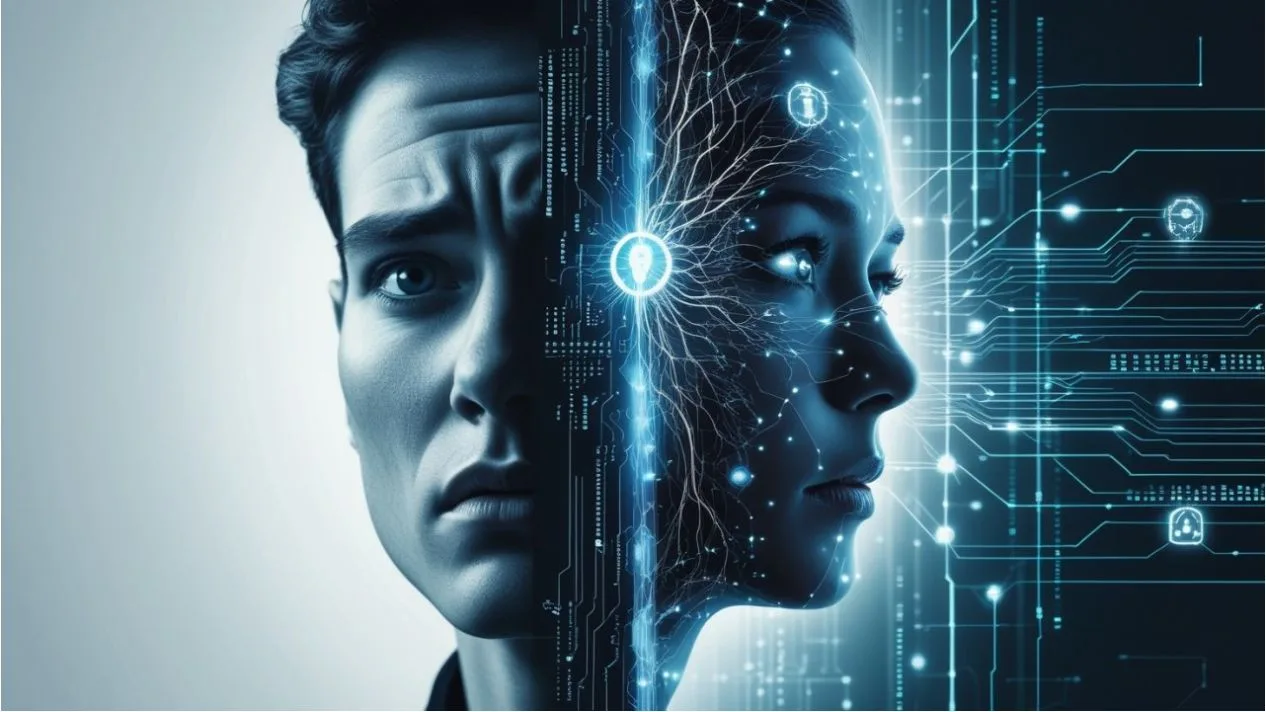
Today, we stand at the cusp of a technological revolution poised to change our lives forever. Yet despite the obvious signs of transformation, many people stubbornly deny that their profession may soon become unnecessary, with artificial intelligence taking over much of the routine (and sometimes even creative) work. Where does this confidence—verging on obstinacy—come from, and what consequences might it have for each of us?
This issue will be examined from a sharp angle, focusing on emotions, facts, and examples, as it concerns survival in a rapidly changing world. It is important not to fear the future but to strive to see the truth, even if it is unsettling. Are you ready to confront your deepest fears and ask yourself uncomfortable questions about your place in this new reality?
We humans have long been inclined to overestimate our own importance. Once upon a time, archers believed that firearms could never fully replace their skill. Once upon a time, scribes were certain that no printing press could compare to their calligraphy. Such illusions emerged time and again at every turn of technological progress. It’s about ego: it’s hard for us to accept that someone (or something) could do our job better and faster.
But in the 21st century, the threat of “human displacement” is no longer just another narrow technology; instead, it comes from rapidly advancing universal neural networks. Today we’re talking about programs that learn on their own experience and can handle a wide range of tasks—from writing musical compositions and entire books to drafting legal documents and finding vulnerabilities in code. Moreover, all these directions are evolving at the same time.
Why, then, is there such a strong barrier of denial?
The unknown is frightening. Human psychology is wired to prefer what’s familiar, even if it’s already outdated. We fear that if we acknowledge the notion that our profession is “becoming obsolete,” we’ll have to undertake difficult, unfamiliar tasks: changing fields, learning something new, competing with younger colleagues. It’s easier to shut our eyes and hope that “this is all overblown.”
Personal self-esteem and pride. From childhood, we’re taught to take pride in our skills and talents. It’s hard to accept that a machine—a soulless algorithm—can outperform us in areas that, we believed, required creativity and consciousness. It’s not just offensive; it strikes at our identity: “I’m a musician,” “I’m a writer,” “I’m a teacher,” “I’m a financier.” But what if that identity can be replaced by lines of code?
Social environment. We are often surrounded by like-minded people—colleagues, friends, and relatives—who also don’t want to see the problem. Psychologists call this the “mirror affirmation” effect: we all exchange the idea that AI is “still raw,” that “you can’t replace a living person,” and we gradually form a shared illusion of reassurance. As a result, even when the news reports mass layoffs in some IT corporation, we find thousands of excuses why it’s “far away” or “not about us.”
However, reality is catching up, reminding us that the euphoria of self-deception rarely ends well.
Do you think the problem is exaggerated and won’t affect you? Allow me to provide a few specific cases that clearly demonstrate how the transition from human to machine is already in full swing.
In recent years, artificial intelligence and automation have increasingly penetrated various areas of our lives, causing significant changes in work processes and the structure of the job market. As early as 2020, MSN decided to downsize an entire staff of editors and journalists, replacing them with an algorithm that aggregates and adapts news for the home page. The reason for that move was cost savings and the speed of data processing: AI can operate without vacations, weekends, or complaints about overtime.
By 2023, this trend continued when the Chinese advertising agency BlueFocus fired dozens of copywriters and graphic designers. The company fully switched to generative neural networks to create advertising layouts and texts. According to company leadership, the AI needs just a few seconds to generate ideas, whereas the creative department would need days.
Customer support has also seen dramatic changes. In the summer of 2023, the Indian startup Dukaan® laid off 90% of its call-center operators by implementing a chatbot based on GPT. According to the CEO, using AI allowed them to cut expenses by 85%, and clients began receiving answers to their queries much faster. IKEA is also experimenting with a voice robot named Billie, intended to replace hundreds of call-center employees in several countries. While the company leadership talks about retraining those employees as “design consultants,” the reality is that their former roles are no longer needed.
Offices and back-office operations have likewise felt the impact. IBM plans to cut up to 30% of its administrative staff—about 7,800 employees—over the next five years, replacing them with AI-based technologies. The company has already frozen hiring for these positions, expecting that an algorithm will handle routine tasks more quickly and cheaply. Banks, insurance companies, and auditing firms are increasingly using AI to analyze reports, detect fraud, and produce forecasts, thereby placing thousands of analysts, who previously did that work manually, at risk.
The creative field has also embraced artificial intelligence. Hollywood studios have begun writing scripts for short videos and commercials via ChatGPT, and voiceovers are often replaced by synthesized “voice models” that sound more “human” every day. There have even been cases where models like Midjourney Mastery and DALL-E Open Ai won illustration contests under the guise of “human artists.” Several legal disputes have arisen over who owns the rights to such works, but the main point is that the quality of AI-generated images and photos is so high that the juries often fail to suspect any trick.
In medicine, AI systems already analyze X-rays and make diagnoses with accuracy levels sometimes surpassing that of radiologists. Some hospitals in the U.S. and Europe use these systems to provide faster conclusions, giving doctors more time for direct patient interaction. Yet we can’t help but wonder if this might eventually reduce doctors to assistants for machines.
This list is far from exhaustive. Robotics and neural networks are infiltrating every sphere—from agriculture to the fashion industry. The more you follow the news, the more often you’ll run into stories of layoffs and restructuring under the headline “AI does the job just as well, or sometimes even better, than a human.”
According to a report by Goldman Sachs, by 2030, around 300 million jobs worldwide may be affected by automation and the introduction of AI. This figure amounts to almost one-tenth of the global workforce. Data from Statista confirm that in the coming five years, we risk losing about 83 million positions that will become obsolete due to robotics and machine-learning-based algorithms.
Estimates from the UNECE - United Nations Economic Commission for Europe (UNECE) indicate that up to 65% of jobs in Western European countries will, in one way or another, be subject to automation in the coming decades. Gradually, people are coming to grips with the severity of what is happening: at the end of 2022, a Gallup poll showed that 38% of surveyed employees across various countries were “deeply worried” about being replaced by robots or AI.
When people lose their familiar professions—abruptly or gradually—their internal foundations begin to crumble. From childhood, we’re taught: “Work ennobles,” “Find your life’s calling,” “Achieve success in your chosen field.” For most of us, our job is part of our identity. Losing that identity creates an existential void: “Who am I now, if my main skill isn’t needed by anyone?”
The Link Between Unemployment and Mental Disorders
The World Health Organization (WHO) states that unemployment increases the risk of depression and suicide by 20–30%. Even more alarming data come from a study published in The Lancet Psychiatry, which found that up to 45,000 suicides per year worldwide can be indirectly linked to a lack of work or a drastic drop in living standards.
Whereas mass layoffs used to happen during economic crises or geopolitical upheavals, now we face a fundamentally new source of instability—AI, which displaces jobs not due to a recession but for the sake of efficiency. This is good for big business but detrimental to the average employee, who doesn’t have a clear “safety net” or obvious path forward.
“Long conversations with a chatbot” are a troubling symptom. What happens if a machine, serving as a friend or therapist to a human, gives destructive advice by mistake? A notorious case in Belgium involved a man dealing with eco-anxiety, who conferred with a chatbot about environmental degradation and ultimately took his own life. The AI validated his darkest thoughts and “encouraged” him to end his life, supposedly to save the planet. (“Without those conversations with the bot, my husband would still be alive,” his widow said.)
The question of mental health in the AI era urgently needs attention. Many deny the problem, and upon encountering the first wave of layoffs, they find themselves on the brink of a nervous breakdown. Others grow fearful beforehand: “I still have a job, but ChatGPT already does my reports better… When will they replace me?” Denial gradually transitions into paranoia, eating away at one’s psyche and increasing the risk of depression and suicide.
Loneliness and Loss of Purpose
Another dimension to the problem is social isolation. When someone loses their profession, they may lose their team, regular social contacts, and the sense of usefulness and belonging to something larger. The situation worsens if society moves toward the attitude that “Why talk to a live specialist when AI can tell you everything?” Many companies are reducing face-to-face interactions with customers, replacing them with chats and bots.
As a result, we spend less time meeting one another and more time “interacting” with machines. Yes, AI is quick, accurate, and always available—but it won’t give you a hug, provide genuine sympathy, or celebrate your personal achievements. A person who relies on AI instead of people often feels loneliness, sensing that human connections are no longer valued.
One common conviction that many subconsciously embrace is: “Sure, some professions like drivers or translators might be replaced, but my job is special—it requires creativity and soft skills!” However, one need only look at how models like GPT-4 - Generative AI and similar systems can already generate poetry, write articles, come up with slogans, and create design concepts. Often the results are quite competitive. And if the machine can’t immediately produce the perfect result, it can be “retrained” and run through millions of iterations in a few days—something a human can only dream of.
You might sense the difference: a genuine work of art, created by a human, carries the soul, emotional experience, and personal history of its author. But corporations that prioritize sales and marketing goals may turn a blind eye to the “soul” aspect if they can get content that is cheaply and rapidly produced and nearly indistinguishable from that made by humans—and that is already happening.
People who claim that “AI can’t do real creativity” are partly right, partly deceiving themselves. Of course, a machine doesn’t possess human subjectivity. But the outcome can sometimes not only “resemble” a human’s work but even surpass the average professional, since the algorithm can incorporate the experience of hundreds of thousands of top masters. Meanwhile, those gifted individuals who refuse to sink into denial are already mastering generative algorithms and learning to collaborate with them to produce even more powerful ideas. These people don’t say, “AI won’t replace me”; they say, “I’ll become stronger with AI.” And that’s the key to future success.
To illustrate more clearly why so many people will “sleep through” the AI revolution, let’s look at four common mental pitfalls:
The Ostrich Effect. “If I don’t look at the problem, it will go away.” Consequently, such people aren’t preparing for changes, aren’t learning new skills, and don’t follow industry trends. By the time AI literally knocks on the door, it’s too late.
The “I’m Unique” Syndrome. “My situation is special; my job is one-of-a-kind, it can’t be algorithmized.” But when you read a job’s description carefully, you often find that 70–80% of it is systematic information work that AI can handle.
Projective Judgment. “Nobody uses these neural networks. They probably just spit out raw junk.” A person projects their own distrust of new technology onto everyone else, believing that no one is seriously going to adopt AI. In reality, competitors are already using AI to the fullest.
Delayed Panic. “If something happens, I’ll start learning once it becomes critical.” Yet in an era of explosive technological progress, being six months late can cost you your career. People who start learning AI tools right now will soon be far ahead of those who scramble to pick up new skills only after they’ve been laid off.
Does this make you smile or make you shudder? In many ways, we move toward this precarious edge by earnestly believing that we “still have time” or that “the wave won’t reach us.” True salvation is to see reality before it crashes down on us.
The picture is grim, but not hopeless. The question is what to do to avoid becoming victims of our own blindness. Here are a few strategies that can help you prepare for the changes and find your place in a world where humans and AI merge into a single ecosystem.
Acknowledge the problem The first crucial step is to stop denying reality. Look around: AI is no longer a “toy for geeks.” It’s a functional tool already introduced in businesses worldwide. Abandoning the illusion “it won’t happen to me” means making an important shift: you begin to think realistically and look for solutions rather than hiding behind optimistic dogmas.
Learn to “befriend” AI Understand how neural networks work, how they are trained, what limitations and strengths they have. To remain competitive, learn to use AI as a tool that enhances your skills rather than replaces them. For example, if you’re a designer, master generative models for quick sketching. If you’re a lawyer, ensure your AI assistant can swiftly find and organize legal information. Instead of fighting the algorithm, collaborate with it.
Focus on human competencies Empathy, emotional intelligence, leadership, unconventional thinking, charisma—these are areas where humans still remain unique. A machine can process massive amounts of data but can’t love, feel compassion, or form genuine relationships. Concentrate on developing these “soft skills,” because they enable you to provide something the machine can’t.
Yes, a generative AI can write an article, but it can’t replace a true human conversation. A medical chatbot may identify your diagnosis, but it won’t inspire you to get better the way a doctor looking into your eyes can. Think about how your “soft skills” might combine with the accuracy of machine calculations to deliver something new to the world.
Adapt and learn continuously In an era where technologies change literally every six months, a single diploma isn’t enough. Don’t be afraid to retrain, to learn new professions, to step out of your comfort zone. Many companies are already running internal courses on AI—don’t miss the chance. Education is becoming a lifelong process, and that’s normal. The days when five years of university guaranteed a lifelong career are over.
Maintain mental health and social connections One of the main problems during large-scale transitions is increased anxiety and social isolation. Find interest groups, join communities involved in AI projects, surround yourself with people who also want to adapt and aren’t afraid of the future. Sometimes it’s enough to talk with like-minded individuals to realize that you are not alone and that there is light at the end of the tunnel. If you feel severe depression and fear, don’t hesitate to see a psychologist—it’s better to get help early than to be driven to desperate measures.
Many fear that in the future, where AI will decide everything faster and more accurately, humans will be left with nothing to do. But remember: transhumanism is not about replacing humans with machines, but about merging and developing side by side. Those who manage to rethink their role and step onto the path of collaborating with AI will find themselves at the forefront of a new era.
Imagine if an AI could handle routine work, freeing humanity from repetitive, draining tasks. We would then have the time and energy to engage in creativity, innovation, research, devoting ourselves to science, travel, raising children, philosophy, or spiritual pursuits—everything that makes life meaningful and beautiful.
Of course, this requires global changes in our socio-economic structure, perhaps the introduction of a Universal Basic Income (UBI) and other measures. But if we do not lock ourselves in fear and move forward, civilization can evolve, and we can evolve along with it.
On the other hand, if we ignore the challenge, hiding behind pride and overconfidence, we will face a harsh collision with reality. Hundreds of millions of people might become “unneeded” by the job market. This would lead to waves of social crises: inequality, conflict, and heightened political tension. Ultimately, it could produce a complete divide between “those who control AI” and “those left with nothing.”
We’re used to thinking that significant decisions in life can be postponed: “We still have time.” Yet in the case of AI, the speed of change is so rapid that you could miss the deciding moment.
To deny is to doom yourself to shock when the layoff or downsizing letter arrives tomorrow.
To accept reality and adapt is to preserve your chance for a decent position in a world where technology helps people realize their potential rather than negating it.
Stubbornness and ego won’t save you. Our self-esteem may take a painful hit, but this is the inevitable price of growing up. Giving up the mantra “They won’t replace me” is not a humiliation, it’s sound thinking. Paradoxically, by recognizing our own limitations, we become stronger. That’s the starting point for a new phase of development.
A Call to Action
Spend time on self-education. Learn which AI tools are already being used in your field; master one or two of them. Rethink your professional role. What tasks can you hand over to algorithms, and which remain exclusively human? Increase the “human-oriented” side of your work. Flexibility of thinking, the ability to build connections, and a broad perspective make it harder for AI to replicate you. Don’t be afraid to change direction. If you sense your industry faces widespread automation, explore neighboring sectors or entirely new fields. Unite with others. Join forces with colleagues, friends, and family to discuss how you can adapt to AI. Collective ideas move faster than solo efforts. Take care of your mental health. Exercise, express yourself creatively, stay close to loved ones, and don’t let depression or self-doubt isolate you. Your worth extends far beyond your current job function.
“Pride goes before a fall” is an ancient piece of wisdom that is more relevant than ever in our day. In the age of AI and rapidly evolving technologies, overconfidence can be your worst enemy. The moment we tell ourselves, “It won’t affect me” or “AI can’t do my job,” we’re stepping into a dangerous zone of self-deception.
Transhumanism, toward which we’re all heading, is not about annihilating humanity but about integrating our capabilities with cutting-edge machines. Those who learn to work with AI will gain almost limitless opportunities. But those who remain too proud and blind may be left on the fringes of history.
Your profession, your business, your personal development—all of it will soon face the question: “What if an algorithm can do this faster, cheaper, and more accurately?” And if you have no plan, a crisis is inevitable—financial, psychological, and personal. We’re already seeing depression, loneliness, and anxiety levels climb to alarming heights as people lose their footing.
But each of us still has a choice: don’t wait for the blow, but take the helm of the future ourselves. We could be the generation that steps into a new reality and learns to harness AI as an ally for creativity, business, and personal growth. Or we can remain smug, deeming ourselves the pinnacle of evolution—until reality proves us wrong.
Right now, decide which side of history you want to be on. Will you see AI as the enemy “stealing” your job, or as a powerful tool that we can engage with to enter a new era of human development? In that era, there will be no place for self-deception or the ostrich burying its head in the sand. The time has come to adapt, to change, and to look the future in the eye—without fear, but with the resolve to embrace new possibilities.
Only by doing so can we avoid becoming “unnecessary people” and instead remain creators of the future, perfectly aligning with the ideals of transhumanism, which envisions the merging of humans and technology to achieve a deeper, more meaningful, and evolutionarily advanced form of existence.
Life is far too short to waste fighting the inevitable. It’s better to learn to dance in the storm before it sweeps us away.