Source record
The Aesthetics of the Future: Transhumanism and Mental Health in the Web 3.0 Era
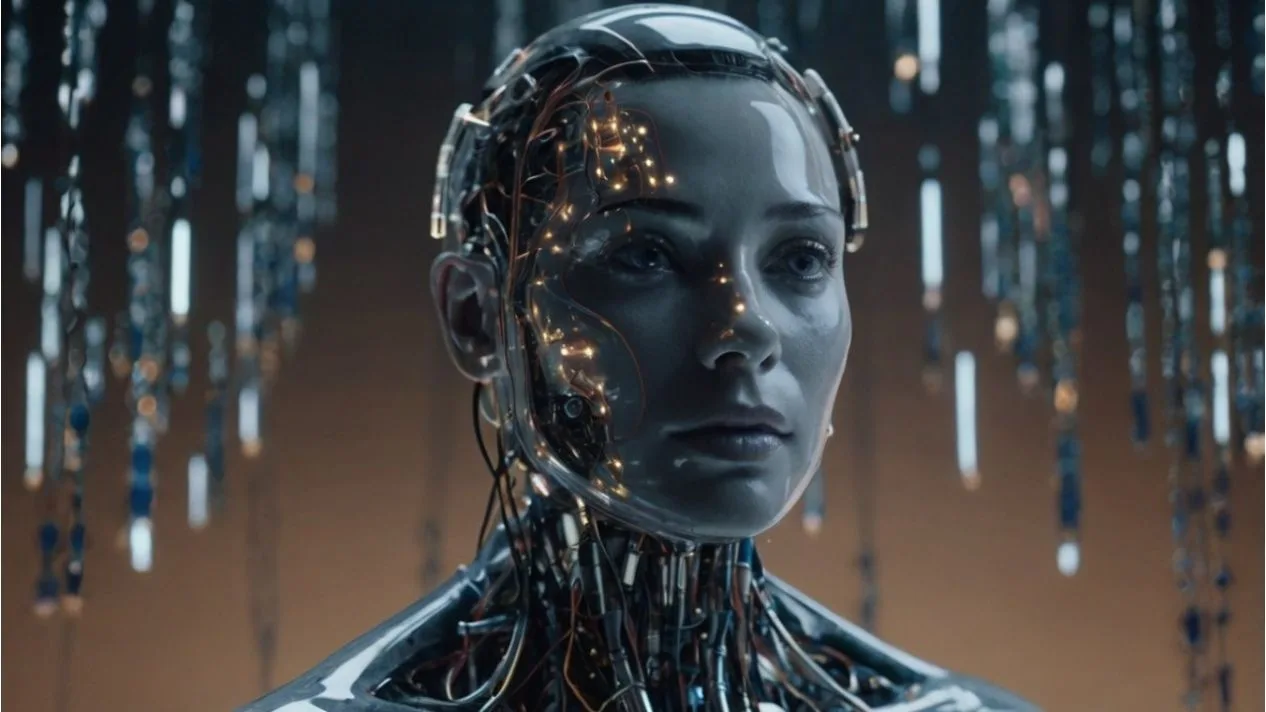
Today, with rapid technological advancements, we find ourselves on the threshold of a new era in which the boundaries of the human body, consciousness, and capabilities are becoming increasingly blurred in a dense digital space. Transhumanism, Web 3.0, genetic engineering, brain-computer interfaces, virtual worlds, and blockchain are all links in one chain, fundamentally affecting our perception of identity, beauty, and the very essence of humanity. How can we, in our pursuit of the perfect appearance and unlimited abilities, avoid losing our connection to our individuality and jeopardizing our mental health? Could digital evolution help us reveal our true selves rather than stifle them? These questions require a comprehensive approach, as they touch upon the foundations of our culture, public values, and ethics.
Transhumanism is a multifaceted philosophical movement that promotes the idea of expanding human capabilities through advanced technologies. Robotics, cybernetic implants, genome editing, bioinformatics, and nanotechnology are just a few areas that lead us to believe we may be living through the most extensive technological revolution in the history of Homo sapiens.
Even now, brain-computer interfaces developed by companies such as Elon Musk’s Neuralink promise breakthroughs in treating neurological disorders and potentially enhancing cognitive abilities. Numerous experiments with neural implant feedback technology show that people can restore lost skills—such as controlling prosthetic limbs through thought alone. The idea of “improving” the brain is so revolutionary that society is beginning to reconsider the concept of normalcy. Should healthy brains be allowed to be enhanced through neural implants? Or should these technologies be limited to therapeutic purposes only?
Similar questions arise around genetic engineering: RISPR technology already allows scientists to edit DNA segments to eliminate hereditary diseases. However, CRISPR’s capabilities go beyond treating pathologies. In the future, there could be modifications aimed at improving physical and intellectual characteristics. According to a Pew Research Center survey (2021), about 60% of Americans expressed “cautious optimism” about using genetic engineering to enhance human appearance or functional abilities. This illustrates how far society might go in overcoming biological limitations.
Thus, transhumanism poses a cultural and ethical challenge: Will we regard the technological expansion of capabilities as a natural continuation of evolution, or see it as a threat to the very essence of humanity? Will we open the door to unprecedented diversity of forms of existence, or will we distort basic values such as empathy, freedom of choice, and equal opportunity?
Simultaneously with the leap in biotechnology, another powerful wave of technological transformation is taking shape in the digital environment—Web 3.0. Unlike Web 2.0, where large social platforms (Facebook, Instagram, TikTok) effectively became “control centers” of user data, Web 3.0 focuses on decentralization and returning control to users themselves. Blockchain technologies and smart contracts provide tools for a more equitable and autonomous existence in the digital sphere.
Virtual worlds like Decentraland, Cryptovoxels, or The Sandbox already allow users to own and trade digital assets, and—most importantly—to create unique objects, including avatars reflecting individual identity. According to a 2023 Statista report, the global blockchain technology market could reach 163 billion dollars by 2027. This exponential growth suggests that Web 3.0 concepts are permeating many areas, from finance to entertainment and the arts.
For many, transitioning to the metaverse signifies moving away from traditional social networks and rigid “recipes” for appearance. Instead of conforming to algorithmically shaped standards (often driven by commercial interests and trends), people in Web 3.0 can go beyond earthly physics or “fashionable” looks. However, this raises a crucial question: Can this freedom truly unleash individuality, or will we create new forms of “virtual uniforms?”
One of the most pressing issues arising in the Web 2.0 era—and likely to intensify in Web 3.0—is the problem of “artificial beauty.” Platforms like Instagram and TikTok, with their many filters, have long set a trend toward visual uniformity: users increasingly choose the same effects for retouching, making their faces flawless by similar “templates” and editing their bodies to match identical standards.
How often do we notice “perfect” images in our feeds, where facial features are filtered and adjusted into the same “marketable” look? According to 2022 research by the Norwegian University of Science and Technology (NTNU), 70% of teenagers feel pressured to meet these idealized online images. The pursuit of a virtual attractiveness—often far removed from reality—leads to a systematic drop in self-esteem among young people, triggering anxiety, depression, and feelings of isolation.
Herein lies the paradox: technologies that seem to offer a vast expansion of self-expression can simultaneously create new constraints that suppress diversity. People spend hours editing photos, comparing their results with influencers who have millions of followers, eventually becoming “digital clones.” A 2021 Pew Research Center study showed that around 70% of U.S. teens actively use photo-editing programs, with many feeling emotionally drained by their constant efforts to “improve” their appearance.
A fundamental question arises: Are we witnessing the formation of a new kind of “digital conformism,” where everyone strives to align with an “ideal image” shaped by algorithms and trends? And if so, might this lead to the loss of individuality for millions of people?
The pursuit of artificial perfection is closely tied to the issue of mental well-being. Despite huge opportunities for online interaction, the paradox of our time is that people can feel lonelier than ever. According to the Centers for Disease Control and Prevention (CDC), about 20% of American teenagers in 2021 reported severe symptoms of depression, and youth suicide rates have increased 57% over the past decade.
Why, with social networks, messaging apps, and gaming platforms at our disposal, do young people increasingly feel isolated and misunderstood? Partly because of idealized lives on social media feeds: everyone posts only their highlights—“happy relationships,” “ideal bodies”—creating an illusion that others live entirely problem-free lives. Consequently, the “social comparison effect” triggers lower self-esteem and depression.
A 2022 American Psychological Association (APA) study noted that reducing time on social media can significantly lessen feelings of loneliness and depression. But in a world where the digital environment has become part of daily life, completely logging off isn’t realistic. Thus, society needs new strategies for psychological literacy, learning how to cope with virtual standards, engage with technology in healthy ways, and foster empathy online.
In the quest for an immaculate appearance and infinite self-improvement, we often overlook the reality behind the glossy images on social media or in fashion blogs. Every new filter, every like, and each comment can become a step toward inner emptiness, though on the surface everything seems dazzling. In reality, while some achieve virtual peaks of popularity, others quietly sink into self-doubt, depression, and a sense of inadequacy.
How best to see the flip side of the coin? Perhaps through real stories of people who face harsh consequences from this chase for physical perfection: some lose themselves behind endless retouching, some become depressed, while others find themselves unprepared to live with a new appearance that no longer feels like theirs.
In any case, societal expectations and personal insecurities can make us hostages to digital images. The lines between virtual and real become blurred, and the emotional toll of constant comparison can overwhelm even the strongest. Can technology preserve uniqueness, or does it inevitably push us toward uniformity? Digital filters, standardized images, beauty standards—all these encourage “similarity” online. But perhaps the same technology allows everyone to create a unique avatar and highlight their individuality? Or is that just the latest trend?
The obvious conclusion is that, to stay sane and preserve our individuality, it’s important to remember that behind these bright pictures and avatars stands a living person with feelings, fears, and vulnerabilities. Yes, technology offers incredible possibilities—but above all, we must ensure it doesn’t drown out our genuine selves or turn our lives into an endless chase for unattainable perfection.
Imagine a world where time seems to have stopped: no wrinkles, not a single crease—only features that look as if they were produced by computer graphics. That world seems close at hand: modern beauty procedures like Botox and fillershave nearly fulfilled the dream of eternal youth. But what price do we really pay for that beauty injection?
The Power of the Needle: Botox and Fillers
Have you considered that Botox is not just an “injection of youth” but also a genuine paradox? On one hand, instant smoothness on the forehead and the disappearance of fine lines promise a surge in self-confidence and the admiration of onlookers. On the other hand—does anyone seriously consider losing facial expressions as the face gradually becomes a “soulless mask?” And what if one day you realize your mirror reflection no longer displays genuine emotions, only a cool, inanimate perfection?
Fillers are another example of how easily one shot of a syringe can alter your facial features. A small tweak to the lips, extra volume for the cheekbones—and you might believe a “new, improved” you has awakened. But it’s so easy to drown in this sea of artificial perfection: once you start, a constant obsession with adding “just a bit more” may never release you. You’re no longer merely using a procedure; it’s become part of your lifestyle, where natural beauty loses its value.
In the pursuit of a flawless mirror reflection, we risk neglecting not just physiological dangers (allergies, filler migration, muscle spasms from Botox) but also our inner world. When your existence revolves around thoughts such as “better not post a photo without a filter,” or every flaw is a potential disaster, a manic chase for polished perfection arises. Eventually, we forget that deep sense of “I” that no external procedure can recreate.
When we talk about the future of humanity, Botox and fillers seem like trifles compared to the idea of modifying our bodies beyond recognition. But aren’t these injections the first step toward transforming the human body into a soulless “project” packed with technologies? Already the pursuit of “enhanced” appearances prompts us to flirt with the boundary between natural humanity and a mechanical doll—though currently only at the facial level.
Transhumanism promises to expand human capabilities, but is it easy to preserve our individuality if we continue erasing all traces of natural aging and authentic emotions? Perhaps these new “beauty tools” simply foreshadow a world where humankind, having forgotten about self-acceptance, merges fully with technology and loses its identity.
The main question: is today’s obsession with cosmetic procedures just a trial balloon for a global transformation, where everyone is free to “upgrade” themselves endlessly? And are we prepared to give up our emotional nature, facial expressions, and even peace of mind in the pursuit of a perfect reflection? The stakes are not just our appearance; they involve our humanity—that spark that makes each of us unique. The further we go, the clearer it becomes: either you start loving your true self, or one day you’ll find you’ve become perfectly empty.
Despite the unsettling nature of the situation, there are reasons for optimism. Some apps and services now propose an alternative approach to editing and posting content, emphasizing authenticity and psychological support. Meanwhile, large beauty-tech companies are developing tools where augmented reality (AR) doesn’t merely mask one’s identity; it allows users to try on different makeup looks or hairstyles without deep alterations to their appearance.
Companies like L'Oréal and SEPHORA have introduced AR features in their apps, letting customers “test” cosmetic products in real time. Unlike filters that distort the face, these solutions focus on an accurate display of eye shadow, lipstick, or blush while preserving natural features. This marks a step toward a healthier perception of beauty, not as forced adherence to a narrow standard, but as a way to emphasize uniqueness.
Another growing trend is support for body positivity and diversity. Where the fashion and advertising industries once enforced rigid standards for body type and appearance, louder voices now advocate embracing “imperfections” as part of our uniqueness. Plus-size models and influencers who promote unretouched images of real bodies are examples of this shift.
When we discuss profound modifications to the body and mind, authenticity becomes paramount. If we add a chip to our brains to learn faster, do we remain ourselves? Where is the dividing line between “unlocking potential” and substituting human nature?
There are different schools of thought within transhumanism. Some argue that technological enhancement is a natural evolutionary path, and refusing it hinders progress. Others point out the risk of social inequality if only the elite can access genetic enhancement or neural implants. Then there is mental health: can a person “enhanced” to the point of losing interest in traditional aspects of life still maintain a cohesive sense of self and empathy toward others?
Where does the boundary lie between “improving” ourselves and losing genuine identity? If we can alter our bodies, genes, and consciousness, can we keep a sense of “I”? How do we draw an ethical line between therapeutic and enhancing methods?
According to studies in the journal Futures (2021–2022), society must establish ethical and psychological frameworksbefore these breakthroughs become widespread. We have to understand that equal access to these technologies does not guarantee equal outcomes. Moreover, we must provide psychotherapeutic and social support for those experiencing identity crises in a world where “human” no longer stops at biology.
Another aspect concerns the virtual worlds of Web 3.0, granting us the ability to don any “digital skin”: become a dragon-like creature with magical powers or adopt an avatar that differs entirely from our physical selves. For some, this experimentation can be inspiring and fuel personal growth. But there are fears: could these metaverses become nothing more than escapes from reality? Can our psyche cope with endless “switching” between dozens of avatars, each demanding its own sense of “I”?
Platforms like Decentraland are already building ecosystems with distinct economies and social and cultural interactions. Digital real estate is sold for staggering sums, while NFT art is a magnet for artists and collectors. Yet will this “new reality” be more free and sincere, or will the same patterns as in the real world—competition for status, chasing trends, uniformity of image—simply reappear?
How will offline communication fit into the age of metaverses if many people spend the bulk of their time in digital spaces? Will our social skills, empathy, and sense of warmth atrophy?
These issues are especially pressing for young people who, on one hand, quickly adapt to new tech and, on the other, are more vulnerable to conformist pressure. Perhaps the solution is to create educational programs and psychological support structures that teach teenagers and young adults to develop digital identities mindfully and maintain a balance between online and offline life.
We are witnessing a profound transformation of our understanding of beauty, individuality, and the limits of the human being. On one hand, transhumanism offers astonishing possibilities: eliminating genetic diseases, restoring lost mobility, raising intelligence, and extending lifespans. On the other, in the quest for “perfection,” it’s all too easy to lose the essence of what makes us human—vulnerable, deeply emotional, and woven together by countless social ties.
This ambivalence is evident in Web 3.0 as well. Decentralization and liberation from traditional social platforms may grant unique self-expression, but also pose the risk of new forms of conformity and even greater social pressure via virtual status and NFT ownership. The move into a new digital reality must include constructive discourse that considers not only economic and technical aspects but also the mental health of individuals, along with their spiritualand cultural identities.
Finally, the rise of artificial beauty has made clear that technology can drive homogenization, turning everyone into copies of a single “ideal” standard. The surge in loneliness and depression among young people is a warning signalprompting us to revisit our values. Embracing diversity, mindful social media use, psychological education, and recognizing that behind outward allure there is a complex, vulnerable inner world are crucial for preserving our individuality in an era of technological evolution.
Can AI tools, neural implants, and genetic engineering help people realize their potential without bowing to the tyranny of perfection? Perhaps the answer lies in balancing our desire to transform ourselves with an awareness of our own uniqueness. Transhumanism doesn’t have to lead us into becoming “biorobots”; it can be a path to deeper self-discovery, provided we appreciate the ethical, social, and psychological dimensions of these changes.
Ultimately, we stand at a crossroads where merging scientific progress with humanistic reflection should guide us. Through a conscious approach to innovation, we can unlock the true potential of humanity without sacrificing our deeper individuality or our emotional bonds with each other. Technology is meant not to silence our voices but to amplify them in a multifaceted, rapidly changing world. However, we must always remember who we are and why we need all these innovations in the first place.