Source record
TO BE OR NOT TO BE: ECO-FRIENDLY BUSINESS IN THE AGE OF TRANSHUMANISM
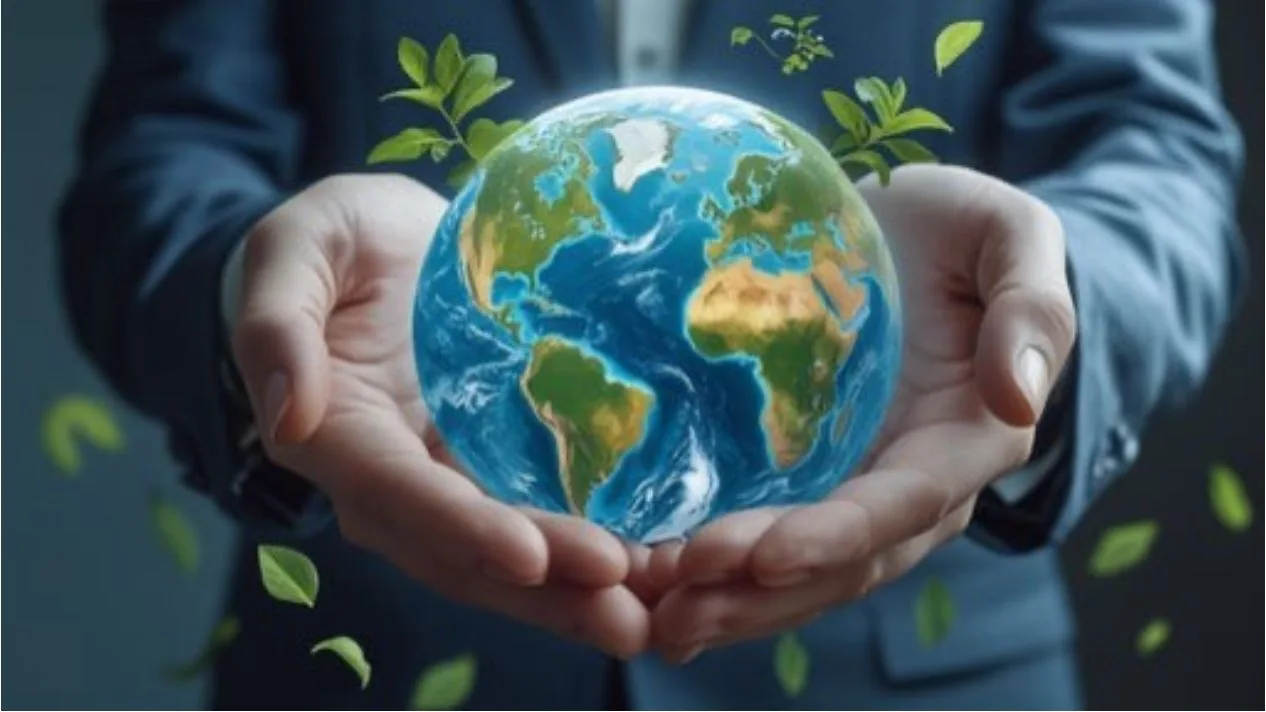
A New Take on Hamlet’s Dilemma. Uttering Hamlet’s famous “to be or not to be,” we inevitably recall the Prince of Denmark, immersed in deep philosophical reflections on life and death. Yet if we transfer this dilemma to our era, it becomes evident that humanity faces similar challenges: an ecological crisis and the rapid development of advanced technologies, such as transhumanism, demand our attention and solutions.
Today, like Hamlet, we stand before a choice: to act or to remain idle. The question of our time is whether we will continue to deplete the planet’s resources, awaiting inevitable disasters, or choose a path of conscious existence—supporting ecological balance and employing innovations for harmonious coexistence with the environment. This article explores how eco-friendly business becomes a key response to modern challenges and what role transhumanist thought plays in enhancing human capabilities through high technology.
When William Shakespeare wrote Hamlet’s monologue, he likely never imagined that four centuries later, humanity would face such grand challenges that his reflection would acquire an almost cosmic resonance. Today, we teeter between two scenarios: actively acting to save the planet and create a harmonious society, or doing nothing, sinking into destructive consumer mechanisms and ignoring the ecological crisis.
Today, this dilemma takes on new meaning. Emerging cutting-edge technologies—from genetic engineering and bionic prosthetics to artificial intelligence—could radically transform our lives. At the same time, climate change threatens the well-being of entire ecosystems. Hamlet’s question becomes a symbol of our choice: will we continue to live under the old paradigm, destroying nature and ourselves, or will we begin to act consciously, opening the way to a new world where nature, technology, and humanity exist in harmony?
“If you had the chance to live forever, would your attitude toward the planet change?” This question is more than rhetorical. About 30% of young people (ages 18–30) experience existential crises, noting that “the future is uncertain, and the planet is in danger.” Another 12% report a constant feeling of “eco-anxiety” (Pew Research Center data). In this context, to be means not leaving everything to chance, but taking responsibility for the future.
At first glance, eco-friendly business and high technology might seem to exist in different universes. Yet at this moment, they are forming a “duo” comparable in power to Hamlet’s monologue. Can innovation be combined with the wisdom of caring for nature? This may be the only path toward a sustainable future.
Imagine a startup at the intersection of AI and agrotechnology: a team of specialists uses drones and machine learning to analyze fields, identifying areas oversaturated with fertilizers and correcting them in real time. The result? Chemical usage drops by 30%, crop yields increase, and damage to the soil decreases. Such projects have already been launched in the Netherlands and Japan, showing that to “be” is to actively improve the world rather than remain a passive observer.
Are we, as a society and as consumers, ready to support such innovations, even if they are more expensive in the short term but save our planet’s resources in the long run? The answer to this question will determine our future and reveal whether nature and technology can co-exist in harmony, creating a new, sustainable society.
A New Market Reality. Modern business strategies have reached a turning point that requires companies to adapt to rapidly changing ecological challenges. Eco-sustainability in business is no longer just a popular trend or an additional option; it has become vital for the long-term survival and prosperity of both companies and society at large. This is due to a number of global factors, including climate change, loss of biodiversity, depletion of water resources, and plastic pollution in the oceans.
Since the early 1970s, the average global temperature has risen by almost 1.2°C, and according to forecasts by the Intergovernmental Panel on Climate Change (IPCC), we risk surpassing the 1.5°C threshold in the coming decades. Biodiversity loss threatens the existence of thousands of species, directly impacting food security, agriculture, and infrastructure. Water resource depletion affects nearly 2 billion people worldwide, according to the World Health Organization (WHO), while more than 8 million tons of plastic enter the oceans each year, causing severe harm to marine ecosystems.
Eco-Oriented Business: A Necessity of Our Time. In these conditions, eco-oriented business is not merely a desire but a necessity. Deloitte research shows that more than 57% of consumers are willing to pay extra for environmentally friendly goods and services, and 94% of millennials believe that business should benefit not only shareholders but also society as a whole. These data suggest that supporting sustainable practices is not a passing trend but an urgent demand of today’s market.
Companies like IKEA and Patagonia demonstrate successful integration of ecological principles into their business operations. For several years, IKEA has actively applied the principles of a circular economy, offering customers the option of returning used furniture for recycling or resale. The company’s goal is to use solely renewable or recycled materials by 2030. Patagonia, in turn, is renowned for its “Worn Wear” program, which allows customers to repair old clothes instead of throwing them away—a practice that not only saves resources but also strengthens customer loyalty. Patagonia also actively supports wilderness protection initiatives and invests a share of its profits in environmental projects.
High Technology and the “Green” Agenda. These examples underscore how difficult it is for companies to operate without factoring in the ecological context. However, a lingering question remains: could this lead to an even more reckless consumption of the planet’s resources? Or, conversely, will enhanced human cognitive and emotional abilities foster greater care for the world around us?
Businesses that introduce transhumanist solutions must consider their ecological implications. For instance, companies developing smart implants for health monitoring may reduce the burden on healthcare systems, but manufacturing biosensors and processing large amounts of data still require significant energy resources.
Eco-friendly business can be seen as a bridge between technology and nature. It’s not just about “green” startups; it’s also about integrating responsible practices into all areas of business. For example, the use of artificial intelligence in urban planning—such as in London’s Office of Technology—helps reduce traffic jams and CO₂ emissions. Blockchain makes it possible to track supply chains for goods like coffee or cocoa, ensuring farmers do not clear forests and receive fair compensation. AR/VR-based educational technologies allow students worldwide to virtually “travel” through the Amazon rainforest, emphasizing the fragility of ecosystems and the importance of preserving them.
Nonetheless, the question remains: can a profit-driven business voluntarily adopt high ecological standards, or will strict government regulations and sanctions be necessary? Where does the line between voluntary choice and societal pressure lie?
Corporate Giants in the “Green” Race. Concrete examples of companies like Google, Beyond Meat, and Microsoft illustrate how ecology and innovation intertwine in success stories. Google has achieved carbon neutrality and invested over $5 billion in renewable energy. AI-based cooling systems have reduced energy consumption in data centers by 15%. This begs the question: can smaller companies afford to ignore this new reality when such giants as Google are prioritizing energy efficiency?
Beyond Meat and Impossible Foods are startups producing plant-based meat alternatives, thereby cutting emissions associated with traditional livestock farming. Mosa Meat is exploring the cultivation of animal cells in lab conditions, producing real meat without slaughter and potentially reducing greenhouse gas emissions by up to 92% and water usage by up to 95%. Yet these products remain expensive and require complex infrastructure. Will people be willing to accept such innovations that challenge traditional farming, and are they prepared to pay more to save nature?
Microsoft aims to become carbon-negative by 2030, investing in reforestation and carbon capture technologies. Is this a marketing tactic to attract a “green” audience, or is it a truly systemic approach that significantly alters the company’s business model?
“To Be” as a Forward-Looking Strategy. These examples serve as proof that “to be” is not just possible, but can also be profitable in the long run. Public interest in ecological issues is growing, and reputational benefits for corporations increasingly outweigh the cost of restructuring production processes, making eco-sustainable business an essential element of the modern economy.
I believe that eco-sustainable business is not merely a passing phenomenon but a necessity that calls on us to be mindful and responsible stewards of our planet. It’s crucial to maintain a balance between economic development and preservation of natural resources, viewing our planet not as a given but as a precious gift we must cherish.
The development of awareness and care for future generations must become central to our thinking and actions. We must remember that the decisions we make today directly impact tomorrow’s quality of life. Humanity must not limit itself to meeting only its current needs while ignoring consequences for the environment. Only by demonstrating responsibility toward nature and implementing sustainable practices can we ensure prosperity for ourselves and for future generations. In this context, business has a critical role to play, integrating ecological values and setting an example for society in its pursuit of a more sustainable future.
Restoring Our Connection to Nature Through Innovation. In an era where questions of efficiency give way to deeper contemplation, the need arises to rethink why we need technologies and innovations and how they influence our lives. Sustainable business and transhumanism function not merely as tools to increase profits and preserve jobs, but also form a new conceptual foundation that reconsiders the very value of life on Earth—both human and non-human. In this context, cultivating ecological empathy is among the greatest challenges of our time.
One of the most significant problems today remains the loss of our connection with nature. Urban dwellers may never see a cornfield grow or a fishing industry at work, even though these processes supply their food. Transhumanism, by expanding our perceptual capacities through virtual and augmented reality, as well as neural interfaces, offers the possibility of restoring this connection. Virtual tours of tropical rainforests and simulators of underwater reefs can be powerful means of raising awareness and empathy for nature. This raises the question: if we learn to perceive nature’s signals directly via neural implants, will we become more attuned to ecological needs, or will we continue pursuing momentary gain?
A New Understanding of Quality of Life and Responsibility. Transitioning business to eco-friendly practices not only saves the planet but also improves the quality of life for employees, customers, and local communities. According to UN data, ecological modernization of enterprises creates on average 18 new jobs for every 10 old ones, especially in the sectors of “clean” energy and recycling. In this context, transhumanism—which promises to “enhance” humanity—can coexist with ecology, promising to “enhance” our shared home. A case in point is a region in Germany where abandoned mines have been converted into geothermal energy sources, creating a technology park for testing new energy-saving projects. This has not only prevented an economic downturn but also improved the quality of life for local residents.
Ultimately, we must consider how we will fill our extended existence with meaning if we choose to live longer and better. The point is not to become “immortal consumers,” but rather to seek harmony. Can we recognize that natural systems and all living beings on the planet are not mere resources, but partners in evolution? Can companies find a balance wherein innovation benefits both the economy and humanity, as well as natural ecosystems? Are we ready to support such approaches, even if it means paying a bit more or investing more time? What happens if we do not accept responsibility for our impact on the environment? What will the world become if we fail to change our attitude toward nature and technology?
Ethics and the Ecological “Brake”. Every technological solution—whether transhumanist human modifications or “green” energy projects—requires consideration of the ethical dimension. The Hamlet-esque question: “Can we ensure that innovations are used for the good of all humanity, not just an elite few?” A business focused solely on profit risks facing public rejection and government restrictions. Responsibility toward nature calls for taking into account a project’s carbon footprint and its impact on ecosystems. The example of chemical fertilizers leading to algae blooms in water bodies is a vivid reminder. How can we change our understanding of ethics in the context of technological progress? What steps must we take to ensure that technology truly serves everyone without exception?
Elon Musk, despite his controversies, has pushed the auto industry toward the mass production of electric cars. However, battery manufacturing and the extraction of rare earth metals are linked to issues requiring heightened accountability. Ethics is not an “optional extra,” but rather the core defining how and why we implement technological innovations, creating value for the future. Are we capable of considering all ecological and social aspects when advancing technologies like electric cars? How can we minimize their negative production and usage consequences?
The Path to Harmony: Technology and Nature as Partners. Where transhumanism meets eco-friendly business lies the potential for a new evolution in which nature and technology enrich one another. Bioengineering and ecosystem restoration, augmented reality for ecological education, and cybernetics to reduce resource consumption—these are just a few directions. For example, the Mc Clean Meats project, advanced by startups like Mosa Meat, proposes growing meat in lab conditions, which can significantly reduce pollution and free up millions of hectares of land. Although the technology is still expensive, its widespread adoption could revolutionize agriculture and reduce greenhouse gas emissions. Could such projects become the norm in the future? What barriers must we overcome to make these innovations accessible to everyone?
Understanding all these aspects requires us to recognize that our future depends on how successfully we can integrate technology with nature. Sustainable development demands not only technological innovation but also a shift in mindset. We must learn to view nature as an equal partner in our shared evolutionary journey.
This calls on us to accept responsibility for our actions and the consequences they may have for the environment and for future generations. Only a conscientious approach grounded in ethics and respect for nature can create a harmonious, sustainable society. How can we educate a new generation ready to face these challenges? What skills and knowledge are needed to build a sustainable future?
Ultimately, we must strive for a future in which technology serves not only our human needs but also the needs of the planet. This is a future where innovations are inextricably linked to ethical principles and accountability to society and the environment. Only in this way can we preserve and enrich our planet, ensuring prosperity and well-being for all its inhabitants. What concrete steps can we take today to move closer to this goal? How can we measure our progress in this direction?
A 21st-Century Manifesto: A Monologue for Everyone. In the 21st century, humanity faces a new dramatic monologue echoing Hamlet’s immortal lines: “To be or not to be?” Today, it is no longer just a personal dilemma of a single prince but a universal call upon which our collective future depends, amid unprecedented ecological and technological changes. It’s not merely a question of choosing between life and death; it is a far deeper dilemma, standing at the brink of the planet’s existence and that of all its inhabitants.
We stand at a crossroads: continue to shut our eyes to climate change, mindlessly exploit the latest transhumanist technologies, and live in the illusion of “unlimited growth,” which could ultimately be our downfall. Or choose “to be”: consciously applying scientific achievements for the good of the planet, seeking ways for business to become the driving force of ecological evolution rather than its downfall. To be means changing the paradigms and laws that govern our world, implementing ESG principles where profit is paired with responsibility, and success is measured not solely by financial metrics but also by contributions to social and environmental well-being.
Transhumanism as a Tool, Not an End in Itself. To be is not just a slogan—it’s a commitment to unlock the potential of transhumanism for the benefit of ecosystems and society as a whole, rather than for the enrichment of a narrow elite. This movement, promising to expand the boundaries of human possibility beyond our biological limits, requires us to engage in constant ethical reflection and introduce an ecological “brake” so that technology does not become yet another source of catastrophe but serves all humankind, helping to solve global issues such as poverty, inequality, and environmental degradation.
Toward a New Paradigm: Nature + Humanity + Innovation. To be means building new communities where innovation, nature, and humanity coexist in harmony, not conflict. This implies creating conditions in which technology becomes our ally in the fight for sustainable development rather than a weapon of destruction. Innovations such as artificial intelligence, blockchain, renewable energy, and “clean meat” can save us if applied not for quick profit but for harmony and prosperity. Achieving this requires us to rethink our values and priorities so that technology truly serves all of humanity.
In this context, “to be or not to be?” is no longer a rhetorical question but a call to action, demanding both personal and collective responsibility. We have the chance to build a business world where profit and environmental accountability go hand in hand, where advanced technology fortifies life rather than destroying it. This approach is supported by major companies that have already implemented environmentally friendly and responsible business practices, as well as by a society increasingly aware of the importance of sustainable development.
Final Call: We Choose “To Be”. And here lies the key to a new world—a world in which, to paraphrase Hamlet, it is “noble” not to remain inactive but to consciously create. The key is for technological achievements and humanistic values to intertwine, shaping a future in which nature and humanity thrive together rather than compete for survival. This demands that we rethink our place in the world and our role in preserving it.
In this new world, “to be” does not mean merely surviving at all costs, but actively and enthusiastically seeking solutions that make life both long and fulfilling and ecologically sustainable. It requires a conscious choice and actions that promote the prosperity of humanity and the planet alike. And if each of us contributes our own “thread” to this shared tapestry, we can say with a clear conscience: “We chose to act; we chose life.” When was the last time you reflected on the impact of your work or your business? Perhaps now is the time to reconsider your approach, to answer yourself: “I choose to be”—to create, preserve, and enrich life in all its forms.
In this way, “to be or not to be?” becomes not just a question but the manifesto of our era, requiring us to recognize our responsibility to future generations and the planet. The choice is ours, and upon it depends what our world will look like tomorrow. Let us choose “to be.”