Source record
Our Habits in the Age of Transhumanism
We live in a time when caring for the body has become the norm. We know what we eat, track our sleep, count steps, and talk about vitamins, recovery, and biological age.
This is real progress. For the first time, many people treat the body as a system, not as something secondary.
And yet, a quiet feeling keeps showing up for many of us: even when everything seems “right,” something still feels off.
On paper, things look good. Food is under control, alcohol is moderate or occasional, movement is part of life, and routines are mostly stable.
But in the background, there is constant inner alertness. Not panic. Not burnout. Just a steady sense of tension, as if life always requires attention.
You don’t feel unwell. You just rarely feel fully restored.
And at some point, a quiet question appears:
Why does the body still feel tired, even when our habits are right?
The answer is not that physical habits don’t work. They do — up to a certain point.
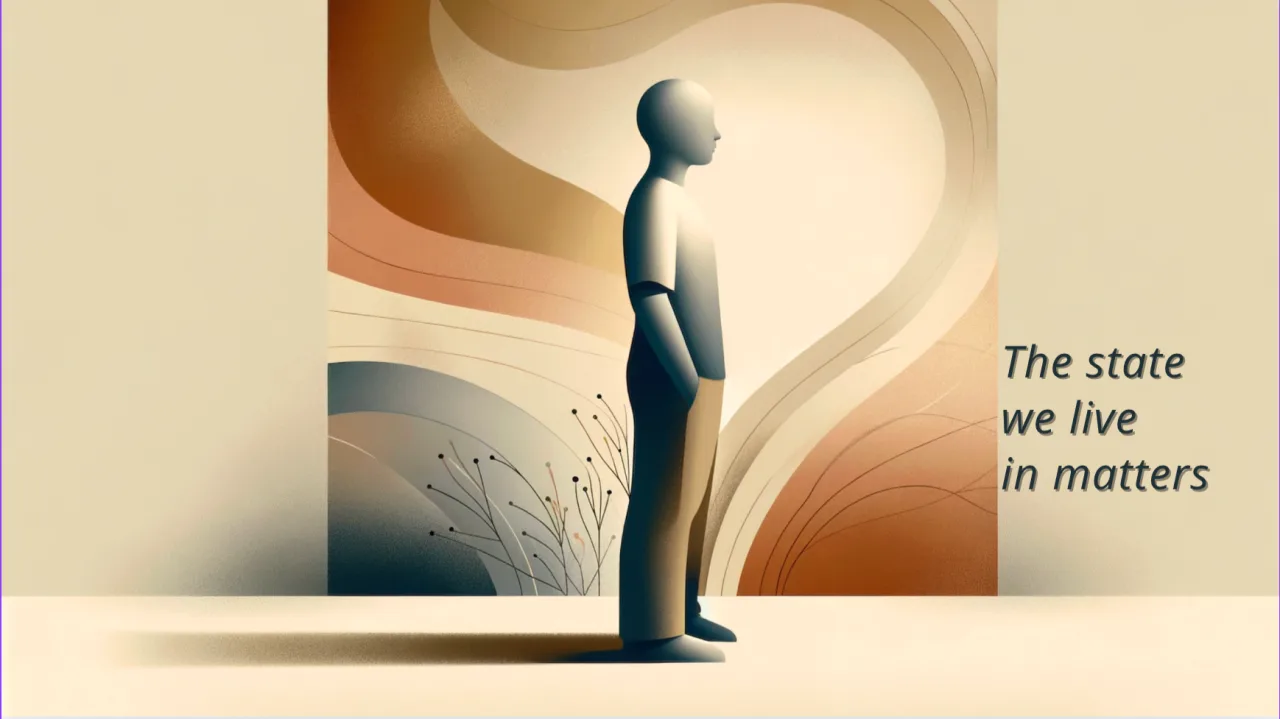
Because the body does not live on its own. It lives inside the state we spend most of our time in.
And most of the day, modern people are replaying future conversations, holding multiple scenarios in their head, and solving problems that haven’t happened yet.
This doesn’t feel harmful. We often call it responsibility, maturity, or strategic thinking.
But for the body, it’s one thing only: constant readiness.
Physical habits are easy to notice. Mental habits are not.
The habit of constant inner processing doesn’t look dangerous. It feels like personality: “I just think a lot. I like to be prepared.”
That’s why it rarely becomes a topic of health, even though it creates the background in which the body either recovers or slowly wears down.
Quietly. Gradually. Almost unnoticed.
In the past, people damaged themselves in obvious ways. Today, it’s more subtle.
Many live disciplined, efficient, well-structured lives. But tension is no longer occasional, it has become the baseline.
The body doesn’t break. It simply lives longer in “standby mode.”
This is where physical habits reach their limit: they maintain form, but they cannot fully compensate for the state in which that form exists.
One clarification matters here.
This is not about a sterile life. And not about giving up joy.
A glass of wine, a relaxed dinner, an unoptimized evening are not the problem if they don’t serve as an escape from anxiety, don’t numb inner tension, and don’t replace real recovery.
The question is not prohibition. The question is function.
Without the futuristic language, transhumanism is simply an attempt to understand the human being as a whole system.
We’ve learned how to take care of the body. The next level is learning how to take care of the state in which that body lives every day.
Not by suppressing emotions. Not by controlling everything. But by learning to notice inner tension, turn anxiety into action, and release what doesn’t need to be lived right now.
Physical habits and inner state are not competitors. They reflect and reinforce each other.
How we think and emotionally live affects the body just as much as food or movement.
You can discipline the body and remain unchanged inside. Or you can change the background state and watch the body respond without struggle.
In the age of transhumanism, the next level doesn’t start with upgrading the body. It starts with awareness of the inner state in which we spend most of our lives.
Because that state quietly shapes our appearance, our energy, and how alive we feel along the way.
Do you mostly work on the body, or have you started paying attention to the state you live in every day?