Source record
Comfort Over Freedom
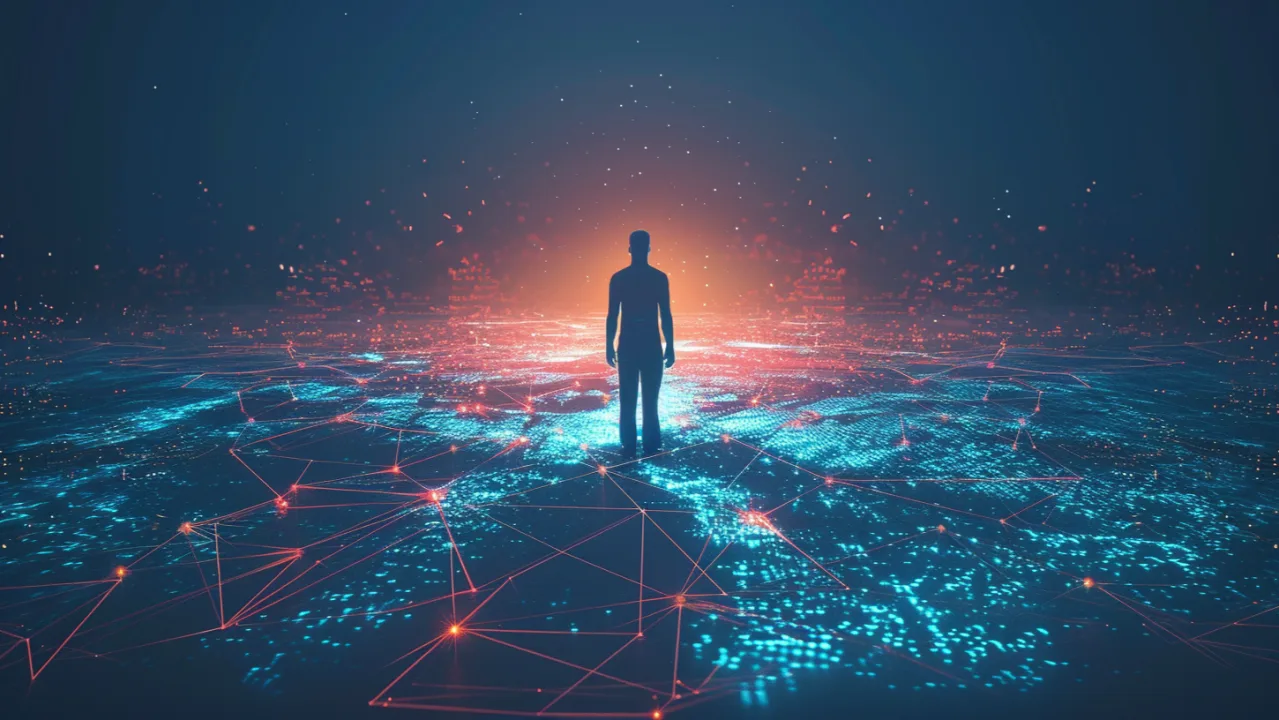
By 2026, an increasing share of decisions is no longer made directly by people.
AI agents, autopilots, recommendation systems, predictive models, all promise speed, efficiency, and optimization. Formally, they exist to help us decide better. In practice, they often help us decide less.
As AI agents quietly move from recommending decisions to executing them, responsibility becomes easier to outsource than ever.
What is quietly shifting is not just how decisions are made, but who carries responsibility for them.
And this is where a 19th-century novel becomes unexpectedly relevant, not as literature, but as a precise model of human behavior under pressure.
Fyodor Dostoevsky approached freedom and responsibility not as abstract concepts, but at the limits of human endurance.
In The Brothers Karamazov, he explored what happens when choice becomes heavy, responsibility becomes uncomfortable, and people begin searching for ways to escape both.
He was not asking how to design better systems. He was asking how much freedom people are actually willing to carry.
That question has returned, this time through algorithms.
When Sigmund Freud called Dostoevsky the greatest expert on the human soul, he was not exaggerating.
Dostoevsky described psychological mechanisms before psychology had language for them.
In The Brothers Karamazov, we see how guilt is rationalized, how ideas replace accountability, how intellect outruns moral maturity, and how logic becomes a refuge from choice.
This is not philosophy. It is decision psychology under pressure.
This is also why leaders keep returning to this book.
They do not read Dostoevsky for quotes or cultural signaling. They return because his work offers something rare: a way to see how intelligence, power, and responsibility collide inside people, not systems.
This is why figures like Henry Kissinger repeatedly turned to Dostoevsky, not for ideology, but for insight into how authority and responsibility deform human judgment under pressure.
For me, this book was never only about understanding others.
I read it to better understand how responsibility and justification operate inside teams, how value conflicts surface when decisions become costly, and — just as importantly — how I myself think and react.
Through Dostoevsky’s characters, I began to notice where I rationalize, where I retreat into intellect, and where I try to offload the tension of choice onto external structures.
That is a rare quality in a book: it works simultaneously as a mirror and as a map.
At the philosophical core of the novel lies the parable of the Grand Inquisitor.
Often mistaken for a religious argument, it is better understood as a universal governance model.
Its logic is brutally simple: freedom requires choice; choice requires responsibility; responsibility creates inner tension; and most people seek relief from that tension.
So freedom is voluntarily exchanged for safety, order, predictability, and relief from decision-making.
The Inquisitor is not cruel. He acts “for people’s own good”. The mechanism is always the same: control framed as care.
That is precisely why his logic works.
AI does not impose control. It offers relief.
Less thinking. Faster decisions. Delegated judgment. Reduced personal exposure.
In modern organizations, this sounds familiar: “The model recommended it.” “The algorithm decided.” “The metrics support this outcome.”
We often say technology takes freedom away. A more accurate statement is this:
People are willing to give up freedom when comfort is offered in return.
AI does not create this tendency. It scales it.
Dostoevsky’s characters are not literary devices. They are recurring decision-making patterns that appear wherever power and pressure meet.
One pattern is intelligence without responsibility — precise, coherent, and morally disengaged. It appears when leaders say, “The data supports this” or “The system decided”. AI amplifies this pattern perfectly, accelerating intelligence without generating meaning.
Intelligence without values is not neutral. It is destabilizing.
Another pattern is impulse under short-term pressure, attention-driven incentives, dopamine-based engagement, metric obsession, and wins that quietly erode foundations. Algorithms do not create this behavior; they make it faster and more profitable.
The rarest pattern is human presence under responsibility — the capacity to remain human when decisions have no clean answers. It shows up as emotional intelligence, presence in difficult conversations, and refusal to outsource responsibility to systems or ideology.
This is not a moral posture. It is the minimum human condition without which systems inevitably dehumanize.
Stripped of literature, this model helps leaders distinguish delegation from abdication, see how rules absorb personal guilt, understand why order feels safer than humanity, and recognize how “care” becomes a tool of control.
This is not about the past. It is about choice under complexity.
The real risk of transhumanism is not technology.
It is the amplification of intelligence without a corresponding strengthening of responsibility.
That is values-free intelligence multiplied by compute.
Technology accelerates everything: maturity becomes leverage, emptiness becomes scale, fear becomes structure.
AI answers how. It never answers why.
Rather than prescriptions, Dostoevsky leaves us with a quieter question:
Are we using technology to widen our responsibility, or to escape it?
He was not warning about religion. He was warning about the human tendency to grow tired of freedom.
AI is not the enemy of humanity. It is a mirror of our maturity.
And that is why The Brothers Karamazov remains unexpectedly useful for those who work with people, decisions, and power.