Source record
Speech as an X-Ray of Thinking: Why Hidden Misalignment Becomes Visible Faster in the Age of AI

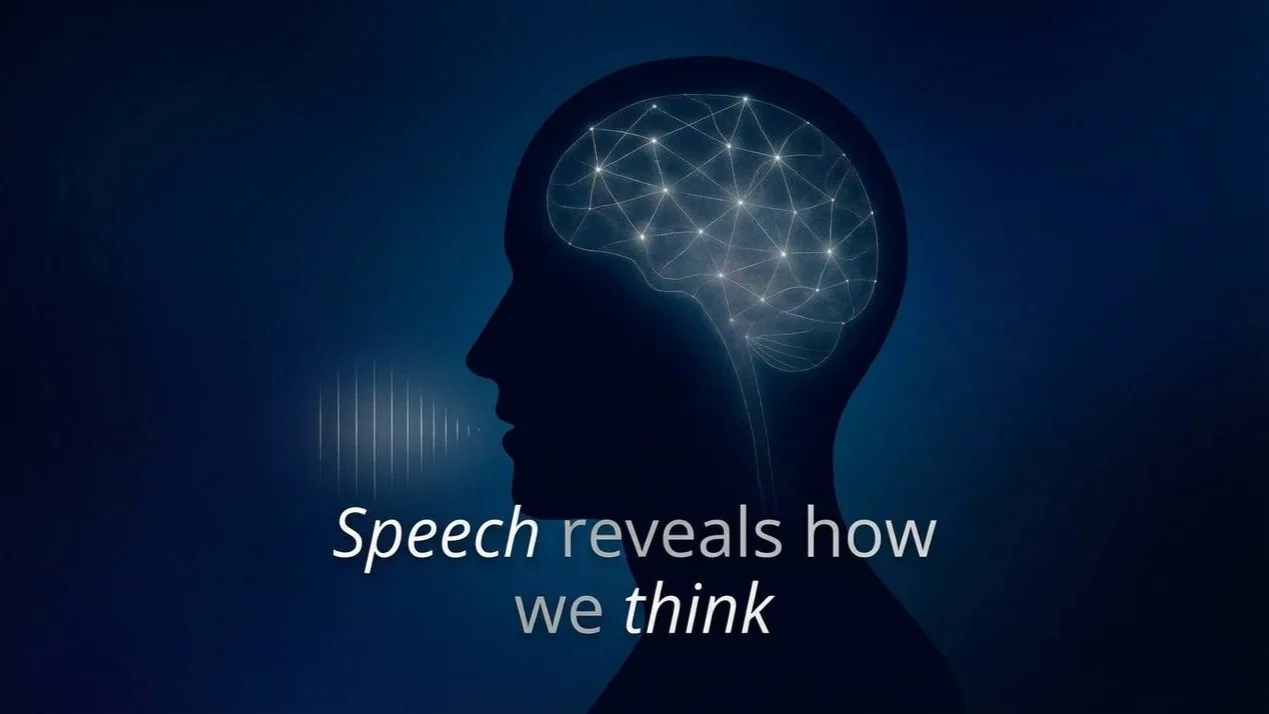
More than two thousand years ago, Socrates treated speech not as ornamentation, but as a diagnostic tool of thinking.
His famous line - “Speak, so that I may see you” - was never about eloquence. It was about structure. Socrates did not listen for polished language. He listened for reasoning: where clarity was avoided, where contradictions appeared, where logic collapsed under pressure. Speech, for him, was a way to observe the architecture of thought.
For most of modern history, this same challenge defined how organizations evaluated people for positions of responsibility. Hiring for leadership, finance, strategy, or governance was never just about skills. It was about trust. Trust in how a person would think, decide, and act when stakes were high.
The process followed a familiar pattern: résumés were reviewed, multiple interview rounds conducted, references checked, public information analyzed. In some cases, psychological assessments or even polygraphs were used. The objective was always the same — and inherently difficult: to determine whether a person’s projected image aligned with their real motivations and decision-making behavior.
The cost of getting this wrong was rarely limited to a bad hire. It showed up as capital losses, leadership failures, broken teams, toxic cultures, and eroded trust, both internally and externally.
This is why interviews were never really about questions. They were about fear. Not the fear of being tested for competence, but the fear of being seen. Seen not necessarily as dishonest, but as internally inconsistent.
Most people intuitively sense where they exaggerate, where aspiration replaces reality, where performance substitutes for clarity. That tension - between who we present and who we are, is the fear of misalignment. Until recently, there was room to hide it: through preparation, rehearsed language, and short interaction windows.
This is not a theoretical observation.
Early in my own career, I felt this fear acutely, not of failing an interview, but of internal inconsistencies surfacing through pauses, logic, or tone. Later came a different lesson: financial success followed by financial loss. Those losses were rarely caused by missing information. They were driven by emotional decisions, unexamined motives, and misplaced confidence.
That experience reframed “soft skills” for me, not as a trend, but as a practical discipline: attention control, cognitive clarity, and the ability to distinguish real motives from projected ones.
This is where artificial intelligence enters the picture.
AI does not read minds. It does not assign moral intent.
What it does is far more specific: it detects statistical inconsistency across signals.
It surfaces misalignment:
between language and reasoning patterns, between reasoning and emotional delivery, between declared identity and consistent behavior over time, between stated and actual incentives.
This is not a digital lie detector. It is algorithmic transparency. Speech becomes central because it is one of the few channels where real-time thinking inevitably leaks through.
Most serious business failures do not originate from flawed ideas. They originate from people whose internal decision logic does not match the role they occupy. History repeatedly follows the same sequence: a compelling narrative, rapid trust accumulation, strong early performance, followed by delayed recognition of internal inconsistency.
The cost of that inconsistency is not philosophical. It is measured in capital, teams, and credibility.
There is an old saying: “Everything hidden eventually becomes visible.” The modern question is no longer whether this happens, but how fast.
Increasingly, the gap between image and reality surfaces in seconds rather than years. This does not create a new risk environment. It compresses the timeline of exposure.
In such conditions, advantage shifts away from presentation. It moves toward internal coherence. Not charisma. Not performance techniques.
But:
clarity of motivation, attentional discipline, consistency of reasoning under pressure, alignment between language and decisions.
These are no longer reflective ideals. They are operational constraints of the modern world.
Artificial intelligence does not create transparency. It accelerates it. The real question is not whether systems can see us more clearly, but whether we are prepared for what becomes visible when they do.