Source record
Modern Marketing and Its Future: Trout’s Laws in the Light of a New Era

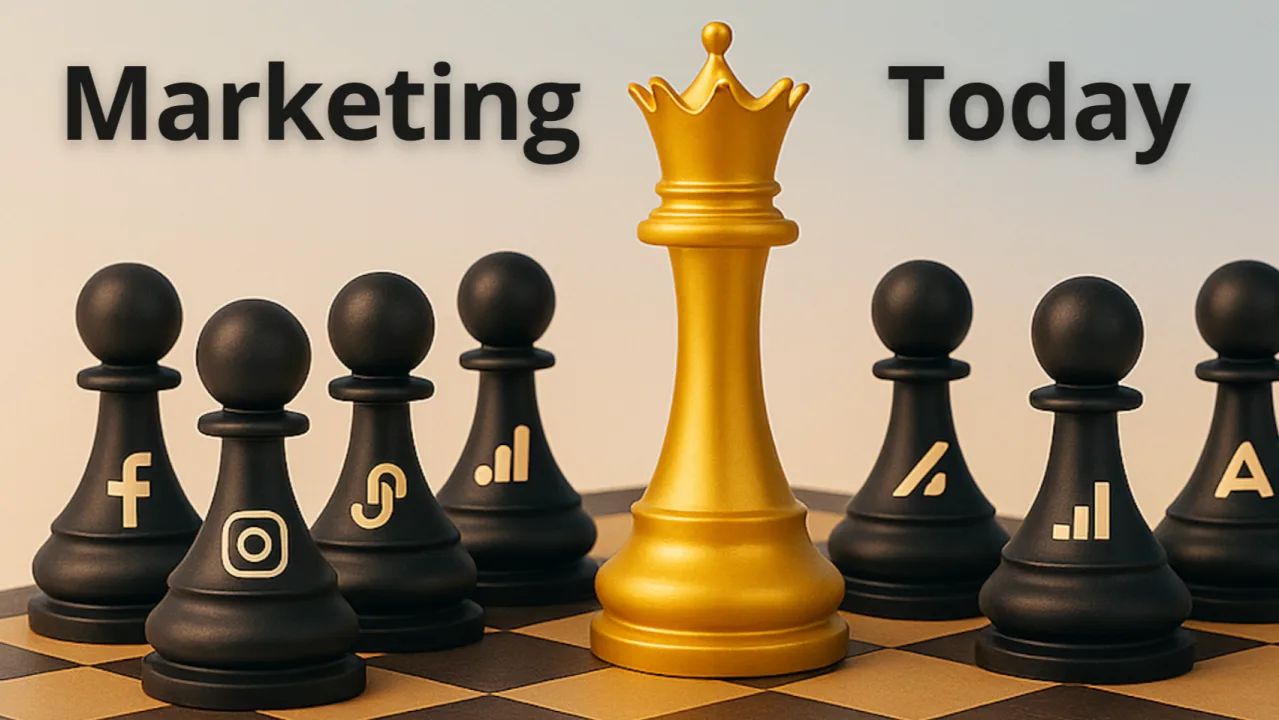
Imagine a chessboard. The pieces may differ — in one game they are billboards, in another, TikTok, in the third, AI bots. But the rules remain the same: pawns move one square at a time; the queen moves anywhere. Marketing works in the same way.
The classic book by Al Ries and Jack Trout, The 22 Immutable Laws of Marketing, is such a set of rules. It was written in 1993, long before Web3, artificial intelligence, and the attention economy. Yet these laws still govern the game. The only question is: how will we apply them in the digital age?
The Law of Leadership says: it’s better to be first than to be better. People remember Neil Armstrong’s name, but few can recall who was second.
Marketing follows the same logic: if you’re first in a category, you almost automatically become the benchmark. But if you’re late, there’s a second chance — the Law of Category. If you can’t be first in an existing niche, create a new one.
Example? Tesla . Cars had existed for a century, but Musk created the category of “electric car as a symbol of the future” — and became the first in it.
👉 At Beeezo , we do the same: we don’t compete in the old ad-tech arena. We open a new category, where human attention becomes a digital asset.
Trout insists: marketing is a battle of perceptions. And in this battle, the winner is the one who owns a single word in the customer’s mind.
Volvo Group = safety. Nike = sport. Google = search.
👉 For Beeezo , that word is “attention.”
We are building a platform where attention is not wasted but measured and monetized. When someone hears “Beeezo,” their mind should immediately say: “the place where attention has value.”
If the leader already owns the position, copying them is pointless. This is the Law of Opposites: if you’re number two, highlight the difference.
Avis Budget Group once admitted: “We’re number two, so we try harder.” That became their superpower.
👉 At Beeezo, we do the same:
— instead of fog — transparency,
— instead of bots and fakes — real users,
— instead of manipulation — value and trust.
We are not the sun of the ad-tech industry, but we are the moon, reflecting light in our own way — cleaner and brighter.
One of the harshest laws is the Law of Sacrifice. To be strong, you must give something up. Amazon started with books, not “everything at once.”
👉 At Beeezo, we also make choices. We deliberately turn down “gray-area” projects and companies for whom inflated numbers matter more than results. This sacrifice narrows the market but strengthens the brand.
Paradoxically, the more you refuse, the stronger your position becomes.
Trout reminds us: the market is a ladder in the customer’s mind. On the first step is the leader, on the second the challenger, on the third the niche player.
👉 Beeezo understands: we are not yet the “first name,” but we are building a strategy to occupy a unique step. We’re not trying to push aside classic players. We are creating our own niche — the attention economy.
Every category eventually splits. Cameras became DSLRs, digital, and smartphones. Beer splits into light, craft, alcohol-free.
👉 The same happens in digital. Already today we see two streams:
— one flowing into “surface-level engagement for clicks,”
— the other into the “deep attention economy.”
We choose the latter. And it is here that the future of marketing is being born.
The Law of Candor states: an admitted weakness increases trust.
Avis admitted it was number two, and it worked. Domino's Pizza Pakistan once said: “Yes, our pizzas were bad, but we changed.” And the market believed them.
👉 At Beeezo, we openly state: the marketing industry suffers from fraud, middlemen, and distorted metrics. We don’t hide the problem — we show that we are here to solve it.
It may seem that artificial intelligence rewrites everything. But Trout was right: the laws of perception don’t change.
AI speeds up testing. Web3 brings transparency. Blockchain ensures trust. But without strategy, these are just tools.
👉 At Beeezo, we use technology as an amplifier. It helps us move faster, but the course is still set by laws proven over decades.
Once upon a time, oil fueled industrialization. Today, the fuel of the new world is attention. It is finite, it cannot be printed, and it is distributed ever more selectively.
👉 At Beeezo, we turn attention into an asset.
We are building an ecosystem where:
— brands receive real, measurable value,
— users earn instead of lose,
— and attention becomes an essential resource of the digital economy.
Here lies the birth of future marketing: not manipulation, but partnership. Not noise, but meaning.
Trout’s 22 laws are not museum pieces. They are rules that help survive chaos and build the future.
Yes, we now have TikTok instead of newspapers, AI personalization instead of banner ads. But the core remains the same: the battle for attention.
👉 And if in the 20th century victory belonged to those who shouted the loudest, in the 21st century it goes to those who can truly listen.
Beeezo is not just marketing. It’s a step into the future, where attention is the new oil, and honesty and trust are the new currency.
📌 Takeaway:
The marketing of the future does not cancel the laws of the past. It only opens a new context in which these laws come alive. Those who read them correctly build empires. Those who ignore them remain in the shadows.