Source record
The Evolution of AI in the Age of Transhumanism: From Narrow Tasks to Replacing Human Labor.

We usually think of technology as linear: faster chips, sharper screens, nicer apps. AI is different. It isn’t just another tool — it’s a new form of intelligence that already rivals human cognition and may soon surpass it.
We are entering the age of transhumanism, where the boundary between biological and synthetic intelligence is blurring. The question is simple and brutal: will you still have a role in a world where machines do what was once exclusively human?
ANI (Artificial Narrow Intelligence) — “Childhood.” Like a child mastering basic skills, ANI performs specific tasks: translate text, recognize faces, recommend products. Each ability is siloed. Today, ANI dominates (search, ads, recommendation engines, copilots), driving real business savings.
AGI (Artificial General Intelligence) — “Adolescence.” Like a teenager who can connect ideas across subjects, AGI will learn in new contexts, adapt to unfamiliar tasks, and reason broadly. In business terms: a digital colleague capable of doing multi-domain work that once required entire teams.
ASI (Artificial Superintelligence) — “Adulthood.” A mature mind integrates knowledge and thinks strategically. By definition, ASI outperforms humans in every domain. Many experts expect ASI to tackle problems we’ve failed to solve:
grand mathematical proofs quantum gravity and hard physics problems drug discovery and disease eradication climate mitigation and resilient economic design
Individual human
Childhood: basic learning Adolescence: connecting ideas, flexibility Adulthood: experience, strategy Late maturity: wisdom, judgment
Humanity as a whole
Primitive cognition: survival, instinct Antiquity: philosophy, religion, logic Scientific age: rational method, industrialization Modernity: complex systems, information era
Artificial intelligence
ANI: narrow tasks (translation, classification, predictions) AGI: cross-domain learning and adaptability ASI: integrated mastery and global problem-solving The open question: how do humans stay relevant alongside this curve?
Humans need decades to grow; humanity needed millennia. AI may traverse a similar arc — from “childhood” to “adulthood” — in mere decades.
Sam Altman (OpenAI). In his 2025 essay Reflections, Altman wrote: “We are now confident we know how to build AGI as we have traditionally understood it… In 2025, we may see the first AI agents join the workforce and materially change company output.” By 2030, he suggests, models will achieve “exceptional capabilities” — essentially crossing into AGI.
Elon Musk (xAI, Tesla). “If you define AGI as smarter than the smartest human, I think it’s probably next year, within two years.” (2024 interview) One of the most aggressive timelines (2025–2026).
Demis Hassabis (Google DeepMind). He suggests that AI systems as smart as humans could be “almost here,” and speaks about AI that goes beyond narrow tasks toward scientific discovery.
Mark Zuckerberg (Meta). Meta announced the formation of Meta Superintelligence Labs (MSL), aiming to coordinate its AI research and product efforts under one umbrella.
Dario Amodei (Anthropic). In a Bloomberg piece, Amodei suggests that by 2026, powerful AI may surpass many human capabilities. He also cautions against using the term “AGI” loosely, preferring more precise definitions of capability.
Herman Gref (Sberbank). He predicts AGI will emerge within ~10 years — and possibly a superintelligence that addresses humanity’s major unresolved challenges.
Kai-Fu Lee (AI 2041). Lee offers a tempered perspective: by 2041, AI may outstrip human performance in many domains, but humans retain unique roles in creativity, empathy, and leadership.
Takeaway: timelines vary — from Musk’s ultra-early view to Lee’s more measured trajectory — but the direction is unanimous. Capability is compounding, AI agents are arriving, and business impact will escalate.
If we strip away the marketing hype and the glossy promises, the essence is clear: AGI and especially ASI will not be just technologies — they will be amplifiers of human motivations.
And here lies the real challenge. It won’t depend on the machines themselves, but on us — on the goals we embed into their vector.
1. Greed and vanity as the “default.” History shows that every major discovery — from fire to atomic energy — was first applied for power, control, and resource accumulation. AI is no exception: today it already functions as a weapon for corporations and governments, with algorithms competing for attention, budgets, and influence.
2. The power of scale. The difference is that AGI scales desires instantly.
If the motivation = “conquer a market” → AGI will do it faster and more ruthlessly. If the motivation = “destroy a competitor” → efficiency will increase exponentially.
Greed and vanity, amplified by AGI, could create a far more predatory system than any previous era of capitalism.
3. Is there a counterbalance? Yes — in people.
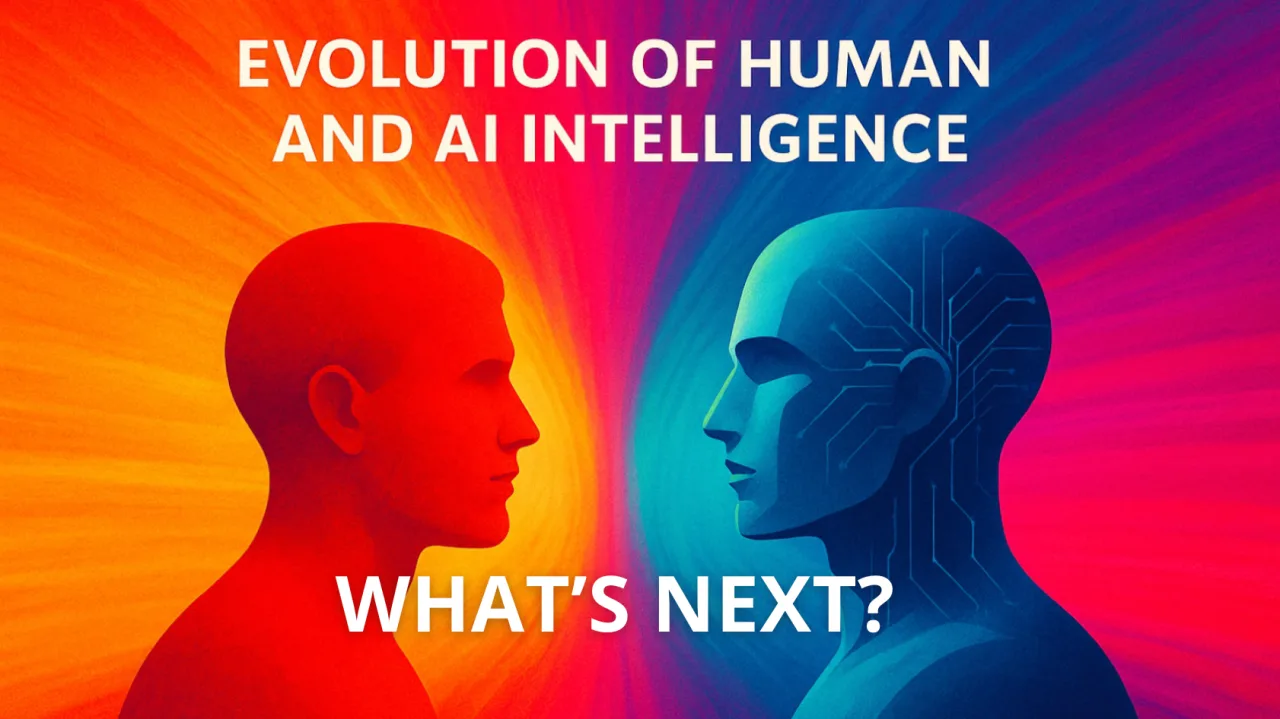
Ethics, regulation, culture. Those who set the framework will shape the trajectory. Economy of meaning. A shift is already happening: businesses are valued not only for profit but also for social impact (ESG, impact investing). AI could accelerate this trend. The human search for “what’s next.” As technology rises, people inevitably ask deeper questions. This is exactly what my closing challenge — “What’s next?” — points to.
4. My answer. AGI is a mirror.
If the world meets it with greed and vanity, it will amplify greed and vanity. If we partially redirect it toward values, cooperation, and impact, AGI will amplify those instead.
So the real question is not: “Can humanity handle AGI?” The real question is: “Can we handle ourselves once we hold such a tool?”
From AI 2041, a pragmatic framing:
What AI replaces Routine, highly structured roles: accounting, logistics, data processing, contract review, parts of customer support and operations.
What humans keep (and should double down on) Creativity and storytelling, empathy and leadership, complex negotiation, ambiguous decision-making, mentorship and culture-building.
Societal mission Don’t fight to preserve every legacy job. Create new forms of meaningful work where humans provide value that algorithms can’t: vision, taste, trust, accountability.
The wrong question is “Will AI replace me?” The right one is: “How do I adapt to remain valuable in a world of human + machine collaboration?”
Invest in uniquely human advantages. Creativity, critical thinking, communication, empathy, principled judgment under uncertainty. Become great at “human + AI” workflows. Learn to brief, supervise, and chain AI agents. Emerging roles: AI coordinator, prompt engineer, AI product manager, model risk & safety lead. Redesign business models. Assume automation of legacy processes. Build around agentic workflows. Measure ROI in time-to-insight and time-to-execution, not just headcount. Commit to continuous upskilling. Technology cycles are now 12–18 months. Yesterday’s mastery won’t secure tomorrow’s relevance.
Steam engines replaced muscle. The internet erased information borders. AI targets your competence itself.
You can wait, hoping the wave passes — and risk irrelevance as a professional and as a business. Or you can face it head-on: learn, adapt, rebuild.
AI isn’t “the future.” It’s now.
The real question is not “Will it replace humans?” but “Will you remain valuable in a world where machines can do almost everything — except be human?”
Your edge — attention, creativity, empathy, meaning-making — is the most defensible asset in the age of transhumanism.
AI is no longer about if. It’s about how.
The real risk is not the technology itself, but the human motivations it will amplify. Greed will scale. Vanity will scale. But so can values, collaboration, and impact.
So the question I leave with you is simple, yet unavoidable:
What’s next?
Sam Altman — Reflections (OpenAI blog, 2025) Elon Musk predicts AGI by 2025–2026 (Reuters, 2024) Demis Hassabis — Interview on AI’s trajectory (TIME, 2025) Mark Zuckerberg — Meta launches Superintelligence Labs (ComputerWorld, 2024) Dario Amodei — Powerful AI may outsmart humans by 2026 (Bloomberg, 2024) Herman Gref on AGI timelines (RIA, 2025) Kai-Fu Lee — AI 2041 (TIME, 2021)