Source record
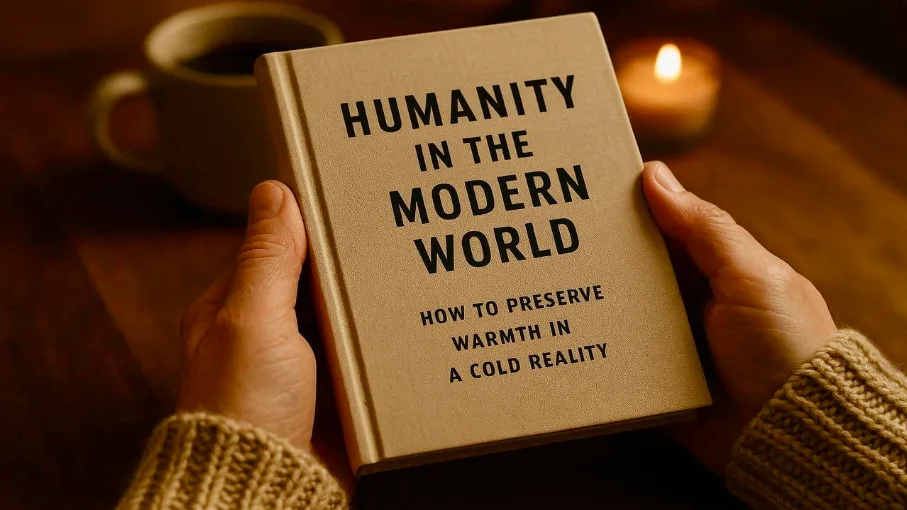
Humanity in the Modern World: How to Preserve Warmth in a Cold Reality

In an age of constant motion and frequent conflict, it is easy to feel swept up in reactivity and division. When stress and disagreements run high, people can become defensive or quick to anger, and we risk losing sight of one fundamental truth: our shared humanity. Yet even in a fast-paced, high-conflict world, the essence of being human shines through in how we treat one another. It lies in our capacity for empathy, our emotional awareness, the simple kindnesses we choose each day, and our willingness to pause and truly see each other. In exploring what it means to be human today, we find that our emotional lives are deeply interconnected. We are, as one researcher observes, “neurobiologically hardwired for connection with other people, and in the absence of it there is always suffering.” Being human is about recognizing that connection, nurturing it with compassion and patience, and remaining open to others even amid adversity.
At the heart of our humanity is empathy – the ability to understand and share the feelings of others. Empathy allows us to step out of our own perspective and recognize the emotions and experiences of another person. Psychologists have described empathy as a kind of psychological “superglue” that bonds individuals together and motivates acts of kindness, cooperation, and forgiveness. In other words, empathy helps hold the fabric of society together by fostering understanding and care. Even on a biological level, humans seem wired for empathy: researchers have identified specialized brain cells (mirror neurons) that “enable everyone to mirror emotions, to share another person’s pain, fear, or joy”. This means that when we see someone hurt, afraid, or joyful, our brains naturally echo those feelings within ourselves. Such emotional awareness is a profound asset – it reminds us that the people around us are not so different from us after all.
Cultivating empathy often starts with a simple but powerful habit: listening with an open heart. When we truly pay attention to another’s words and emotions without rushing to judgment, we validate their humanity. In tense situations, this empathic listening can defuse conflict by showing someone that they are seen and heard. Indeed, empathy has been called “the most precious human quality,” one that keeps our hearts open and helps us “foster tolerance and understanding” even when we disagree. Emotional awareness of both others and ourselves – recognizing when someone’s anger masks hurt, or when our own defensiveness stems from fear – allows us to respond with compassion instead of contempt. In a hurried world, slowing down to acknowledge the feelings beneath people’s words can bridge the gap between us. Empathy reminds us that everyone carries struggles and hopes, and that recognizing these inner experiences in each other is key to our shared humanity.
In a fast-paced environment, our first impulse in a high-conflict situation might be to react immediately – to snap back with a sharp retort or mirror the aggression we feel. However, one of the most humanizing choices we can make is to pause before reacting. A brief pause acts as a circuit-breaker for knee-jerk emotional responses. Psychologists refer to this as a form of cognitive reappraisal, and research shows it can have measurable benefits. When we “pause and reframe a situation before reacting,” it actually changes how our brain processes the experience, leading to calmer responses. In fact, a 2018 study found that people who routinely took a moment to pause and rethink their emotional reaction had lower stress levels and made more thoughtful decisions than those who reacted immediately. This underscores a simple truth: between stimulus and response, there is a space, and in that space lies our opportunity to choose a constructive response.
Pausing gives us the power to respond with intention rather than impulse. For example, if someone speaks to us harshly, our immediate reaction might be anger or hurt. By taking a slow breath and pausing, we create a moment to consider what might be behind their words – perhaps frustration or pain of their own – or simply to remind ourselves that an angry impulse from us will only escalate the conflict. This moment of reflection can transform our response. Instead of lashing back, we might ask a clarifying question or express that we understand they’re upset. Often, this softens the interaction; the other person may feel seen rather than attacked, which can defuse their anger. The power of the pause is that it injects empathy and thought into what could otherwise become a reflexive cycle of reaction. It allows us to remain present and aware of our better intentions. In practicing this, we embody a crucial aspect of being human: the ability to align our actions with our values of understanding and kindness, rather than merely with our immediate emotions.
A colorful graphic with the word "Kindness" emphasizes how simple acts of caring can brighten someone’s day.
Being human is also about the everyday kindnesses that weave goodwill into our relationships and communities. In turbulent times, small acts of kindness are powerful affirmations of our shared humanity. A gentle word to a stressed coworker, a door held for a stranger, a moment spent helping someone carry a heavy load – these seemingly minor gestures can have an outsized impact. Research has found that acts of kindness are directly “linked to increased feelings of well-being” in those who perform them. In being kind to others, we often uplift ourselves as well. Kindness strengthens social bonds; by helping someone else, we can create a sense of belonging for both the giver and receiver, reducing feelings of isolation in both parties. In a high-conflict world, such moments of care are like oases of connection.
Crucially, kindness tends to be contagious. One thoughtful action can inspire another, creating a ripple effect of goodwill. Studies note that “acts of kindness can make the world a happier place for everyone”, boosting not only happiness but also encouraging those who witness or experience kindness to repeat the good deeds themselves. In this way, a single act of compassion can spread far beyond its starting point, gradually fostering a more compassionate community. This reminds us that our daily choices matter. We don’t have to single-handedly solve world conflicts to affirm what it means to be human; we can begin with simple decency and care in our immediate sphere. Each small kindness – a smile, a listening ear, a word of encouragement – reinforces the understanding that we are all in this together. Such gestures, humble as they are, carry the profound message that every person is worthy of respect and care. In showing kindness, we acknowledge each other’s humanity in one of the most direct ways possible.
Human beings are emotional mirrors to one another. We often reflect the moods and attitudes we encounter, usually without realizing it. If we walk into a room where everyone is tense and irritable, we tend to pick up on that tension and may start to feel on edge ourselves. Conversely, a warm, friendly environment can put us at ease. Science has illuminated this phenomenon by identifying mechanisms like emotional contagion, where one person’s emotions spread to others nearby. For instance, observers have noted that one crying infant will set off a wave of crying in a hospital nursery, and one person’s loud anxiety in a workplace can spread to other workers in the room. In daily life, we continuously influence each other’s emotional states. This means that in a conflict, if one person’s anger rises, it often triggers anger or defensiveness in the other, creating a mirror effect of negativity. Yet the opposite can also be true: calm and compassion can be mirrored as well. Recognizing that we are emotional mirrors invites us to be more mindful of what we project to those around us.
Understanding this mirroring effect is key to maintaining our humanity under stress. If we know that our emotions are contagious, we can choose which emotions we want to spread. By staying emotionally aware, we might notice, “I am getting angry; if I lash out, the other person will likely mirror that anger back to me.” That awareness gives us a chance to shift. We can try to model the understanding or patience we wish to see. Often, one person’s composed and empathetic demeanor can gradually bring down the emotional temperature of an entire interaction. This is not always easy – it takes inner strength to remain kind when faced with hostility – but such efforts can break the cycle of mirrored anger. In essence, each of us has the power to influence the emotional climate around us. By choosing empathy over aggression, and patience over panic, we invite others to do the same. In a very real sense, being human means being connected in this emotional web; our feelings echo in each other. When we remember that we reflect one another, it encourages us to lead with the qualities we hope to receive, whether that’s respect, understanding, or love.
In times of conflict, anger and defensiveness often rise up as shields to protect our pride or hide our vulnerabilities. However, these reactions can also blind us to each other’s humanity. When we are angry, we tend to see the other person as an enemy or an obstacle rather than as a fellow human being with feelings and needs. Defensiveness, likewise, closes us off from understanding the other’s perspective because we become preoccupied with proving ourselves right or blameless. Psychological research supports the idea that empathy and anger are at odds: empathy is widely seen as key to reducing aggressive behavior, and people who are high in empathy are more likely to refrain from hurting others. On the flip side, those who are prone to aggression or rage often exhibit lower levels of empathic concern. In essence, when anger takes over, empathy declines – it becomes difficult to step into the other person’s shoes or to care about their feelings. We’ve likely all experienced this in moments of intense argument, when the rush of anger narrows our focus to “winning” or defending ourselves. In such moments, we may say hurtful things or refuse to listen, effectively dehumanizing the person in front of us (at least temporarily). The tragedy is that this only deepens the divide between us.
Overcoming anger and defensiveness requires conscious effort and humility. It means choosing to let our guard down a little when we sense ourselves puffing up. One helpful approach is to replace defensiveness with curiosity. As one communication expert points out, shifting from defensiveness to curiosity can transform our interactions, since fear shrinks our world, but curiosity expands it. Instead of immediately countering an accusation with “That’s not true!” or “It’s not my fault,” we might take a breath and ask, “Why is this person so upset? What do they need or fear right now?” This does not mean accepting mistreatment; rather, it means refusing to let anger hijack our own values. By staying curious and calm, we signal that we are willing to see the situation from both sides. In many cases, this softens the other person’s stance as well – when they no longer feel the wall of our defensiveness, they may lower their own. The courage to be gentle in the face of anger can break the cycle of attack and counter-attack, revealing two humans who, beneath the heated emotions, both seek to be understood. In doing so, we reaffirm each other’s humanity. We demonstrate that even when we are hurt or angry, we can choose empathy and respect over wrath. This is not about being passive or suppressing valid feelings; it is about guiding those feelings toward understanding rather than destruction.
A profound way we recognize each other’s humanity is through shared vulnerability. To be human is to know struggle, fear, and imperfection. Yet, paradoxically, acknowledging these very vulnerabilities can bring people closer together. When someone admits, “I’m scared,” “I feel hurt,” or “I need help,” it strikes a chord in others who have felt the same. We are reminded that underneath our defenses, we all want to be seen and accepted for who we truly are. Embracing vulnerability means letting go of the need to appear invulnerable or perfect. It means allowing others to witness our authentic feelings, even when they are uncomfortable. This openness is the bedrock of trust and intimacy. As researcher Brené Brown famously put it, “Staying vulnerable is a risk we have to take if we want to experience connection.” Indeed, showing vulnerability can be risky – we risk judgment or rejection – but it is also the only way others can truly know us and empathize with us. When we dare to be genuine, we give others permission to do the same. In that mutual openness, real understanding blooms.
Shared vulnerability also fosters compassion. When a friend confides their fears or failures, we don’t think less of them; more often, we feel closer to them. We recognize our own human frailty in theirs. In a broader sense, remembering that everyone has wounds and worries helps cultivate empathy in our day-to-day encounters. The stranger who snaps at us in traffic might be carrying heavy burdens we know nothing about. The colleague who seems withdrawn might be grappling with anxiety or grief. If we assume that others, like us, have their own private struggles, we may respond with more patience and kindness. This perspective shifts us from seeing opponents or obstacles to seeing fellow humans doing the best they can. It bridges the gap between “us” and “them.” Our shared vulnerability is a great equalizer – no one is perfect or unbreakable. And that’s okay. In fact, it is what binds us together. When times are tough, recognizing our common weakness becomes a source of strength: we can support each other. We find that being human isn’t about wearing armor at all times; it’s about knowing when to lay it down and meet each other heart to heart.
In the end, the meaning of being human in a high-conflict world is not about being perfect – free of anger, never making mistakes, always knowing the right thing to do. Rather, it is about being present and emotionally available, even when it’s difficult. It means continually choosing to come back to empathy, to kindness, to connection, no matter how many times we slip up. Being human is a journey of constant learning and reconnecting. We will all have moments when we lose our temper or retreat behind defensive walls; what matters is that we recognize those moments and decide to try again to reach out from behind those walls. Each day, we are faced with a choice to either close off in self-protection or to open up in understanding. Choosing the latter is an act of courage and hope. It reflects a belief that, despite all the conflict and chaos around us, extending empathy and compassion is worthwhile.
This choice is made easier when we remember that none of us is alone in our imperfections. As Brené Brown reminds us, “You are imperfect, you are wired for struggle, but you are worthy of love and belonging.” All human beings are flawed, yet all of us yearn for connection and acceptance. Knowing this, we can forgive ourselves and others for not being perfect. We can focus instead on staying open to connection. To be human is to be a work in progress – to stumble and get back up, to hurt and then heal, to fear but still to love. In a world that often pushes us to react with haste or hostility, we find our humanity in the deliberate pause, the kind word, the listening ear, and the vulnerable truth. These are the choices that keep us connected to one another. They affirm that beyond the disagreements and defenses, we share a deeper common ground. Ultimately, being human is about choosing to remain present with an open heart, ready to understand and be understood. It is about recognizing our shared vulnerability and deciding, in each encounter, to treat it gently. In doing so, we honor the humanity in ourselves and in each other, lighting the way toward genuine connection even in the midst of conflict.